Synopsis:
India’s 2026 kharif season swung from crisis to cautious recovery within a single month. June brought a severe monsoon deficit and stalled sowing, driven by a strengthening El Niño. July reversed course sharply, with active low-pressure systems narrowing the sowing gap from 20.8% to just 2.9% by month-end. This blog traces that turnaround while flagging what the recovery still hides: lagging pulses and coarse cereals, below-average reservoir levels, and an El Niño set to intensify through September. It closes with why advance weather intelligence and climate-smart agriculture are now essential, not optional, for the seasons ahead.
India’s 2026 kharif season began in fear. It is now standing on a knife’s edge of opportunity.
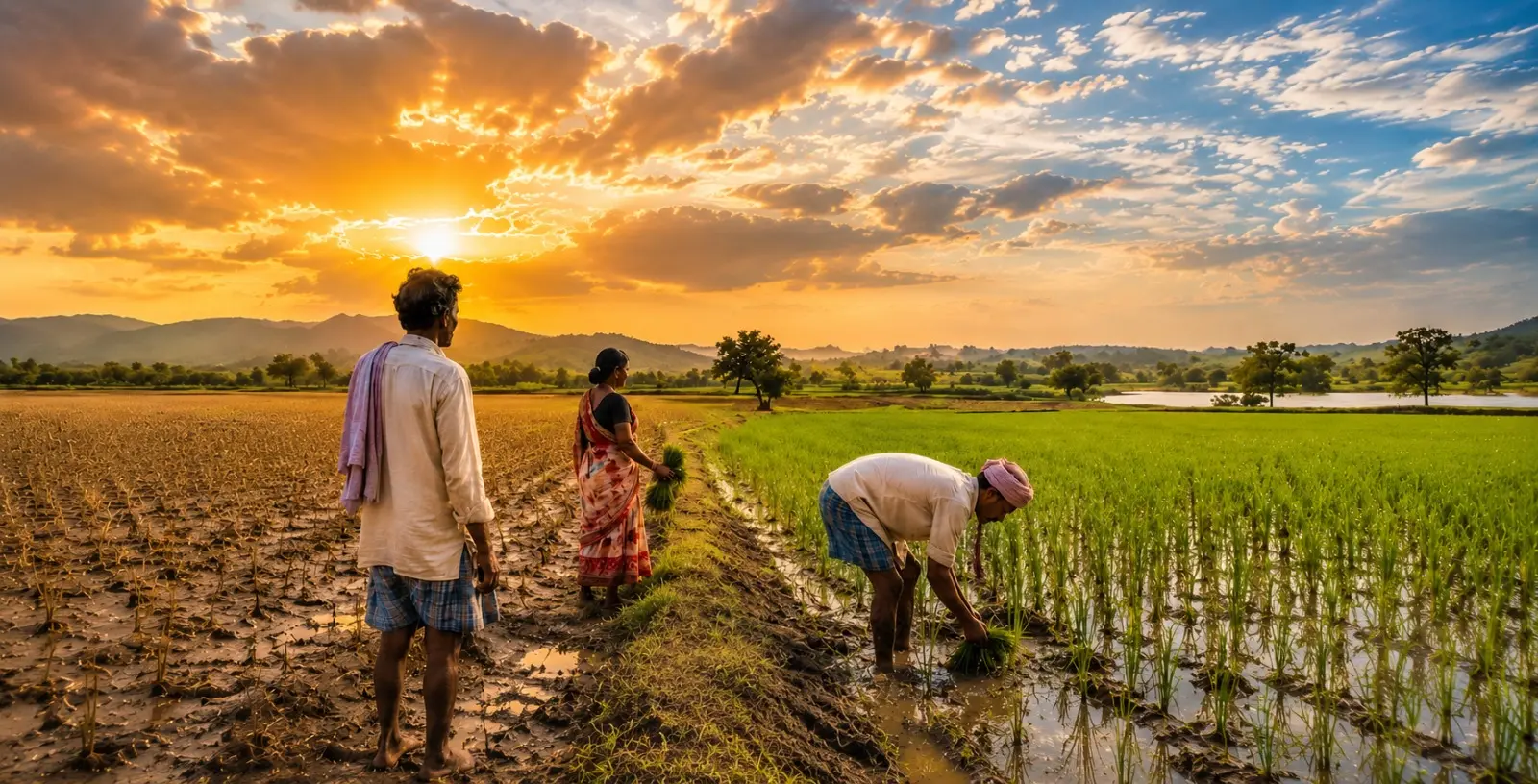
June 2026 brought a rainfall deficit of nearly 38%. El Niño was strengthening. Sowing had stalled across the country. By the first week of July, the gap in kharif sowing area stood at 20.8% below last year. Farmers were delaying decisions. Fertilizer planners were recalculating. The season looked headed for real trouble.
Then July changed the story.
The June 2026 Crisis, in Hindsight
The southwest monsoon’s 2026 onset was late and weak. Official forecasts had already flagged a below-normal season, at roughly 90% of the Long Period Average. El Niño was the reason. It reliably weakens monsoon circulation, and 2026 was no exception.
By mid-June, the deficit had widened to between 35% and 40% in several reports. Karnataka had covered only 20% of its kharif sowing area, far behind normal timelines for that point in the season. Similar delays showed up across other rainfed regions, where cropping calendars depend almost entirely on when the first reliable rains arrive. Vidarbha faced severe shortages paired with high temperatures, a combination that accelerates evapotranspiration and strips soil moisture fast. Nearly half of India’s cultivated land is rainfed. When the rains fail, there is no backup plan. Germination stalled. Farmers waited. The season’s clock kept running, and every week of delay meant a shorter window for crops to reach maturity before harvest season.
July's Reversal: A Lesson in Monsoon Volatility
Then the atmosphere shifted, sharply.
July 2026 recorded four low-pressure systems (LPS), against a normal of three. It logged 24 LPS-active days, against a norm of 14. The result: a 2.4% all-India rainfall surplus for the month, despite El Niño moving from weak-to-moderate into a moderate-to-strong phase. The India Meteorological Department had predicted a below-normal July. It got the opposite.
The impact on sowing was immediate. The kharif sowing gap shifted from 20.8% in early July to just 2.9% by month-end. Late plantings of soyabean, pulses, sesamum, and cotton caught up fast. Crops already in the ground, stressed by weeks without rain, were pulled back from the edge. Without July’s rain, many would have faced stunted vegetative growth that no amount of later rainfall could fully reverse.
Cumulative monsoon-season rainfall deficiency fell in step: from 38% in June, to 22.8% by mid-July, to 11.5% by month-end. Even fertilizer supply held up. Urea production and imports both ran ahead of Apr-Jun 2025 numbers.
Kharif 2026, in short, did not become the disaster many feared in June.
But the Recovery Is Uneven and Incomplete
Here is where urgency returns.
Total progressive kharif coverage reached approximately 89.42 million hectares by end-July. That is close to last year’s 92.07 million hectares, but it is not equal to it. And the aggregate number hides real gaps underneath.
Pulses, maize, and coarse cereals like bajra are still running behind on acreage. These are staple crops for rural income and food security, and they are typically grown by smaller, more rain-dependent farms. A national recovery number does not help a farmer whose bajra crop never got sown at the right window, or whose pulses went in two weeks late and now face a compressed growing cycle before the season ends.
Reservoir levels tell a similar story. Storage improved through July as the rains returned, but several basins remain below their historical averages heading into August. That matters for two reasons. It affects irrigation support for the standing kharif crop if rainfall turns patchy again in the coming weeks. And it affects water availability for rabi sowing later this year, when the same reservoirs will need to carry the winter-spring crop through its own dry spells.
And El Niño has not gone away. Conditions are expected to strengthen into a “very strong” event by October 2026, persisting into the following quarter. The IMD has forecast below-normal rainfall for the second half of the monsoon season. El Niño’s effects also arrive with a lag, meaning today’s moderate conditions can still produce late-season stress that shows up in September and October, and potentially into the rabi crop as well.
The standing kharif crop needs good rain in the second half of August and early September. Without it, this recovery narrative reverses fast.
The Real Lesson: Predictability Is the New Productivity Tool
This season is a case study in why farming cannot run on seasonal averages anymore. A forecast of “90% of normal” told nobody that June would collapse to a 38% deficit, or that July would swing to a 2.4% surplus. The variability inside the average is what actually determines whether a crop survives.
This is exactly why advance, hyperlocal weather alerts matter more than ever. A farmer who knows a dry spell is coming can delay sowing by ten days and save the season. Similarly, a farmer who knows rain is arriving can plant into the window instead of missing it. The difference between a good and a ruined kharif season increasingly comes down to information, delivered early enough to act on.
Climate-smart agriculture is no longer a long-term sustainability goal. It is this season’s survival strategy. That means
- Hyper-local weather alerts.
- Real-time soil moisture data.
- Crop-stage-specific risk alerts.
- Real-time Crop Health assessment.
- Advanced disease alerts & actionable risk mitigation efforts.
- Water management built around actual reservoir and rainfall trends, not historical assumptions
The farms and institutions that build this capability now will be the ones still standing confidently through the next El Niño cycle.
Where Cropin Fits In
This is precisely the gap Cropin was built to close. Our satellite-based crop monitoring and AI-powered weather intelligence give farmers, agribusinesses, and lenders the same thing the 2026 monsoon just proved everyone needs: early, plot-level warning, not a national average. Cropin tracks rainfall, evapotranspiration, and crop stress continuously, across every financed or monitored plot, and flags risk 10 to 15 days ahead, meaning enough time to act, not just react. As El Niño intensifies into the back half of this season, that lead time is the difference between a managed setback and a lost harvest. This is what climate-resilient agriculture looks like in practice: intelligence that reaches the field before the damage does.
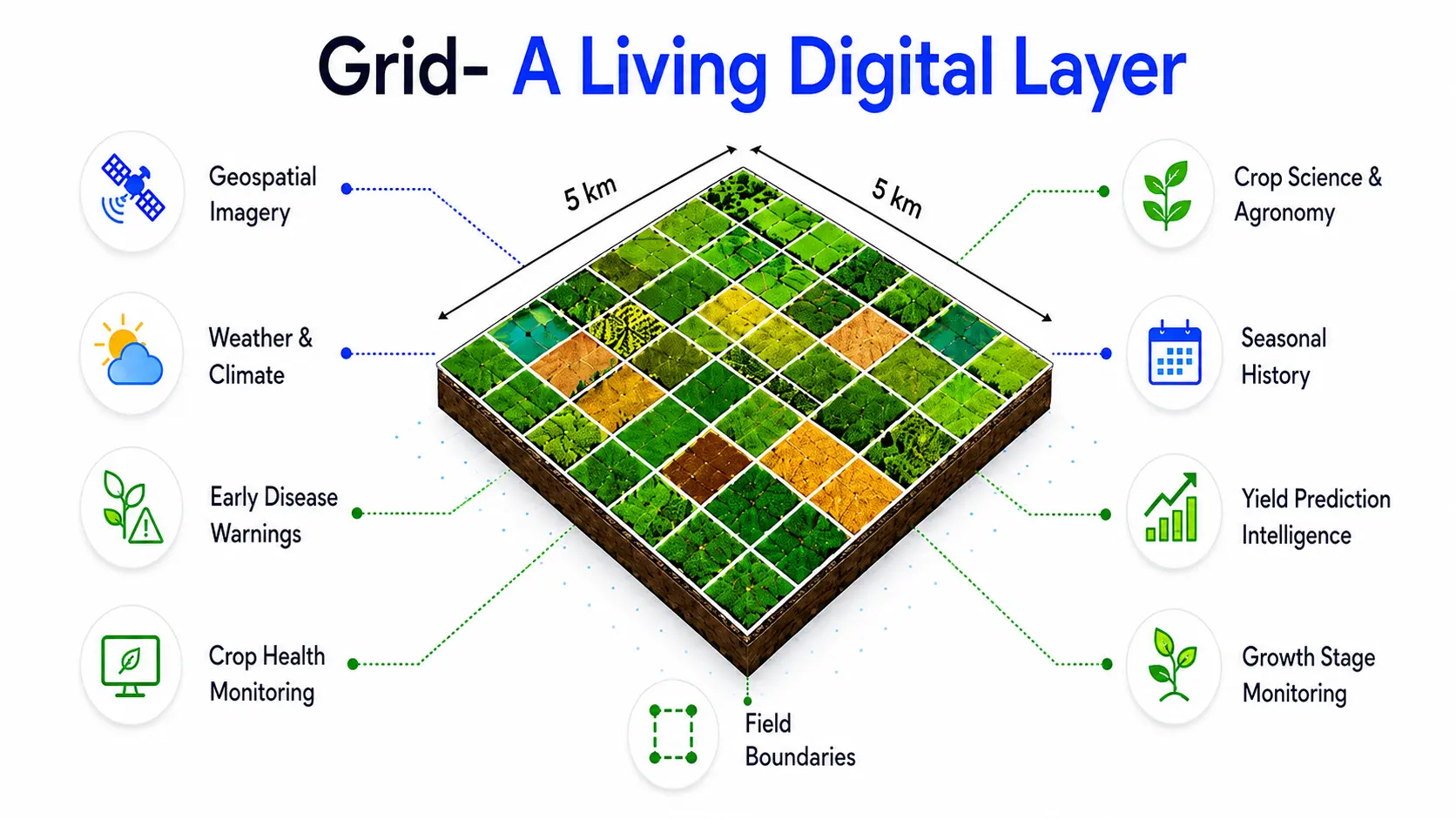
To further consolidate actionable intelligence for the farmers, agri-food businesses, and the entire agri eco-system, Cropin launched OrbitAI, the agentic AI layer for food and agriculture. The agents leverage 15 years of gridified, grounded, and verified field data collated from 0.7 billion field records across 100+ countries and 400+ crops. The data is processed by 22+ predictive agronomic models, including crop stage, crop health, yield estimations, climate risk, and water stress, at 90% field-verified prediction accuracy, with proprietary IP carrying the reasoning to answer the queries raised on OrbitAI.
Conclusion: A Season That Isn't Over Yet
Kharif 2026 has already told two very different stories in three months. June said crisis. July said recovery. August and September will decide which one defines the season.
The overall numbers are encouraging. The 2.9% sowing gap, the falling rainfall deficiency, and the steady fertilizer supply are real signs of resilience. But pulses and coarse cereals are still behind. Reservoirs are still short of historical norms. El Niño is still strengthening.
India’s agriculture sector cannot afford to read this as a story with an ending. It is a story still being written, one rainfall event at a time. The government’s supply-side management and the sector’s shift toward genuinely climate-smart, alert-driven farming will determine whether this season closes as a genuine recovery or a false one.
The rain has bought time. What happens with that time is the real story of Kharif 2026.
Frequently asked questions (FAQs)
How is agentic AI used in precision agriculture?
Agentic AI powers precision agriculture by continuously sensing zone-level field conditions soil, crop health, moisture and autonomously adjusting irrigation, nutrient application, and interventions at that same granular level, rather than applying uniform treatment across an entire field.
What data does agentic AI need to work on a farm?
It typically draws on soil sensor data, drone and satellite imagery, weather API feeds, historical climate and yield records, and market signals, combining them into a continuously updated picture of farm conditions.
How is agentic AI different from traditional AI in agriculture?
Traditional AI in agriculture typically generates recommendations or predictions using historical data and online information. Agentic AI integrates multiple deep learning models to perceive conditions and derive autonomous, actionable intelligence. It continuously monitors the outcomes of actions and provides insights.
How do multiple AI agents coordinate on a single farm?
Conceptualized models for weather, crop health, yield, and more share data and communicate in real time, negotiating a combined response as a team of domain experts would. AI agents, however, do this continuously and at machine speed.
Is agentic AI the same as autonomous tractors or farm robots?
No. Autonomous tractors and robots are physical execution tools. Agentic AI is the decision-making intelligence layer that can be used to derive insights that direct those tools and many other systems. It is based on continuous data and reasoning, and is not the physical hardware itself.
Author Bio

Pavithra S
Pavithra S is a Digital Agronomist at Cropin, bridging agronomic wisdom with cutting-edge technology. A post-graduate in Agriculture, she contributes to core initiatives, such as leveraging remote sensing, weather analytics, and weather-based advisory systems to enhance crop productivity and sustainability. Her work includes developing advanced crop intelligence frameworks, such as crop profiling, growth stage mapping, and disease-risk assessment for both agriculture and high-value horticultural crops. By integrating agronomic science with digital innovation, Pavithra ensures Cropin's solutions remain grounded in real-world field realities, creating scalable, impactful tools that support informed decision-making and sustainable growth across the agricultural sector. Her other passion needs no guessing; it is gardening. She also enjoys listening to music.