
From a One-Bedroom Apartment to the World’s Largest AI Platform for Food & Agriculture

Table of contents

In 2010, Cropin did not begin as a business opportunity. It began as discomfort.
In a modest one-bedroom apartment in Bengaluru, Krishna Kumar made what he often describes as an emotional decision. Because outside that apartment, farmers were struggling. Prices were volatile. Produce was wasted. The climate was unpredictable. Livelihoods were fragile. Agriculture, the industry that feeds the world, was itself operating on uncertainty.
And that question would not go away:
Why is the most essential industry on the planet the least predictable?

Krishna had a stable career. A safe trajectory. But stability feels different when you know something fundamental is broken. So Cropin was born, as a belief that farming could be made more predictable.
Building When the Category Didn’t Exist

Fifteen years ago, “agtech” was not a mainstream category. There were no playbooks, no investor theses, no clear benchmarks. The early days were not glamorous.
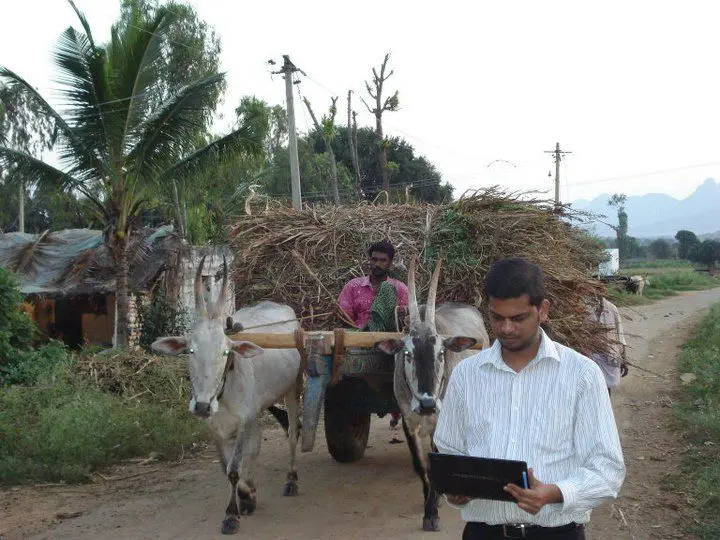
The team went to farms. Sat with farmers. Understood processes that had never been documented digitally. Standard operating procedures had to be written from scratch because nothing was standardized. Agriculture was instinct-driven, experience-driven, season-driven, but rarely data-driven.
The first milestone was digitization. If you cannot see it, you cannot improve it.
Cropin began by helping digitize farm activities, sowing dates, crop cycles, field observations, harvest timelines. It sounds simple today. It wasn’t then. Agriculture is not a factory. Soil behaves differently across villages. Climate shifts without warning. Biodiversity responds unpredictably.
Yet digitization slowly created visibility. Visibility created structure. And the structure created something unexpected, Data!

When Data Started Asking for Intelligence

By 2016–17, Cropin had digitized agricultural operations across multiple geographies. Thousands of fields were mapped. Millions of data points were being generated.
Then came the harder question: Now that we have the data… What do we do with it?
At the time, artificial intelligence was neither fashionable nor widely known term, especially not in agriculture. When Krishna spoke about applying AI to farming, some responded with skepticism. Agriculture itself was still catching up to digitization. Why leap into intelligence?
But digitization was never the end goal. It was the foundation. If farming was unpredictable because of climate, soil variation, and supply chain complexity, then intelligence was not optional. It was necessary.
So Cropin began building early AI models; crop health forecasts, and risk assessments. Nothing flashy. Just careful, practical applications trained on real agricultural data.
Years passed refining these models. Quietly. By the time AI became mainstream conversation, Cropin wasn’t experimenting with it. It was deploying it globally.
The advantage was not hype. It was time.

A Turning Point

Then came 2020.
When the world stopped moving during the pandemic, agriculture felt it immediately. Field visits became difficult. On-ground inspections slowed. Supply chains faced disruption. Suddenly, remote visibility was not a convenience, it was survival.
Organizations needed digital dashboards. Predictive insights. Real-time intelligence without physical travel. Years of groundwork paid off.
Adoption accelerated. Conversations matured. Funding followed. The team expanded, engineering, data science, sales & marketing, product, AI research, customer success. What had been patiently built was now scaling.
But 2022 marked something bigger.

From Solutions to a System

The industry was fragmented. Point solutions everywhere, one tool for monitoring, another for traceability, another for analytics.

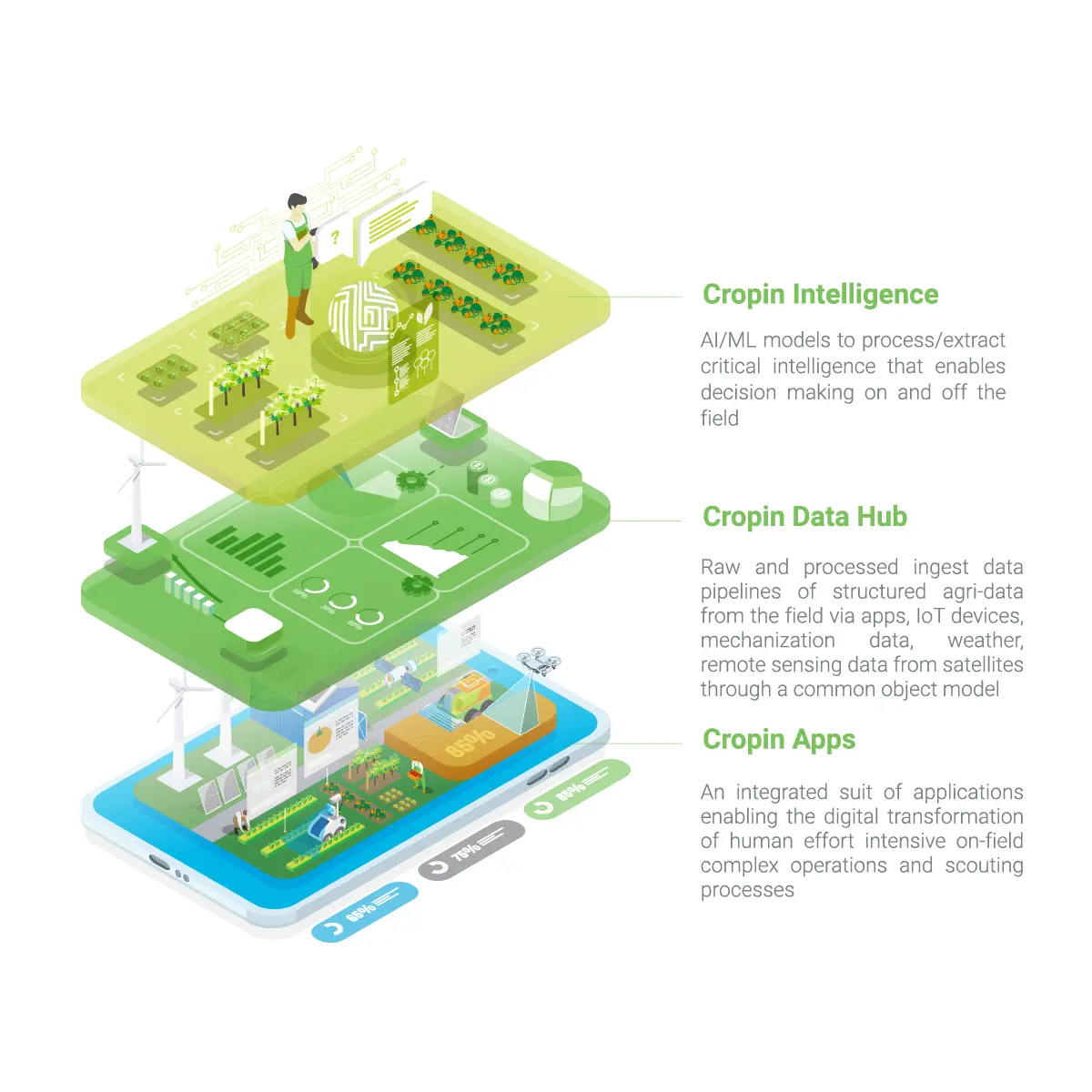
Agriculture does not work in fragments. Farmers cannot operate ten disconnected systems. Enterprises cannot manage siloed intelligence. So Cropin unified everything into one integrated platform: Cropin Cloud.
It wasn’t positioned as just software. It was infrastructure, bringing digitization, data, predictive intelligence, and AI into one ecosystem.
The shift was visible. Conversations moved from small pilot budgets to strategic, multi-year engagements. Cropin was no longer solving isolated use cases. It was enabling entire agricultural networks.
Internally, another decision was made: AI would not sit scattered across teams. It would be institutionalized. Cropin AI Labs was formed, bringing data scientists and AI researchers together under one focused mandate: build agriculture-native intelligence.
And then came a defining leap.

Teaching AI to Understand Agriculture
Generic AI cannot fully understand agriculture.
Agriculture has its own language; of crops, pests, soil stress, climatic anomalies, supply volatility. So Cropin built akṣara, an agriculture-specific open-source Micro Language Model trained on years of domain intelligence.
Soon after, Cropin introduced Cropin Sage, the world’s first real-time generative AI agri-intelligence platform.
Cropin Sage does something powerful: it decodes historical patterns, analyzes real-time conditions, and predicts future yield and food production outcomes. It enables enterprises to anticipate risk, optimize sourcing, and plan diversification strategies before disruption strikes.
Consider cocoa. When production concentrated in West Africa faced disruption, the global chocolate supply chain felt the shock. Climate events or geopolitical issues in one region can ripple across continents. The vision is clear: anticipate before a crisis. Diversify before disruption. Predict before panic.
Food, feed, and fiber are non-negotiable. They cannot operate on guesswork.

Recognition, Scale, and the Ecosystem Vision

As the platform matured, recognition followed. Cropin was acknowledged as a World Economic Forum Technology Pioneer, among a host of other industry accolades. Industry bodies, global institutions, and enterprise leaders began to take note.
But awards and recognitions were never the goal.
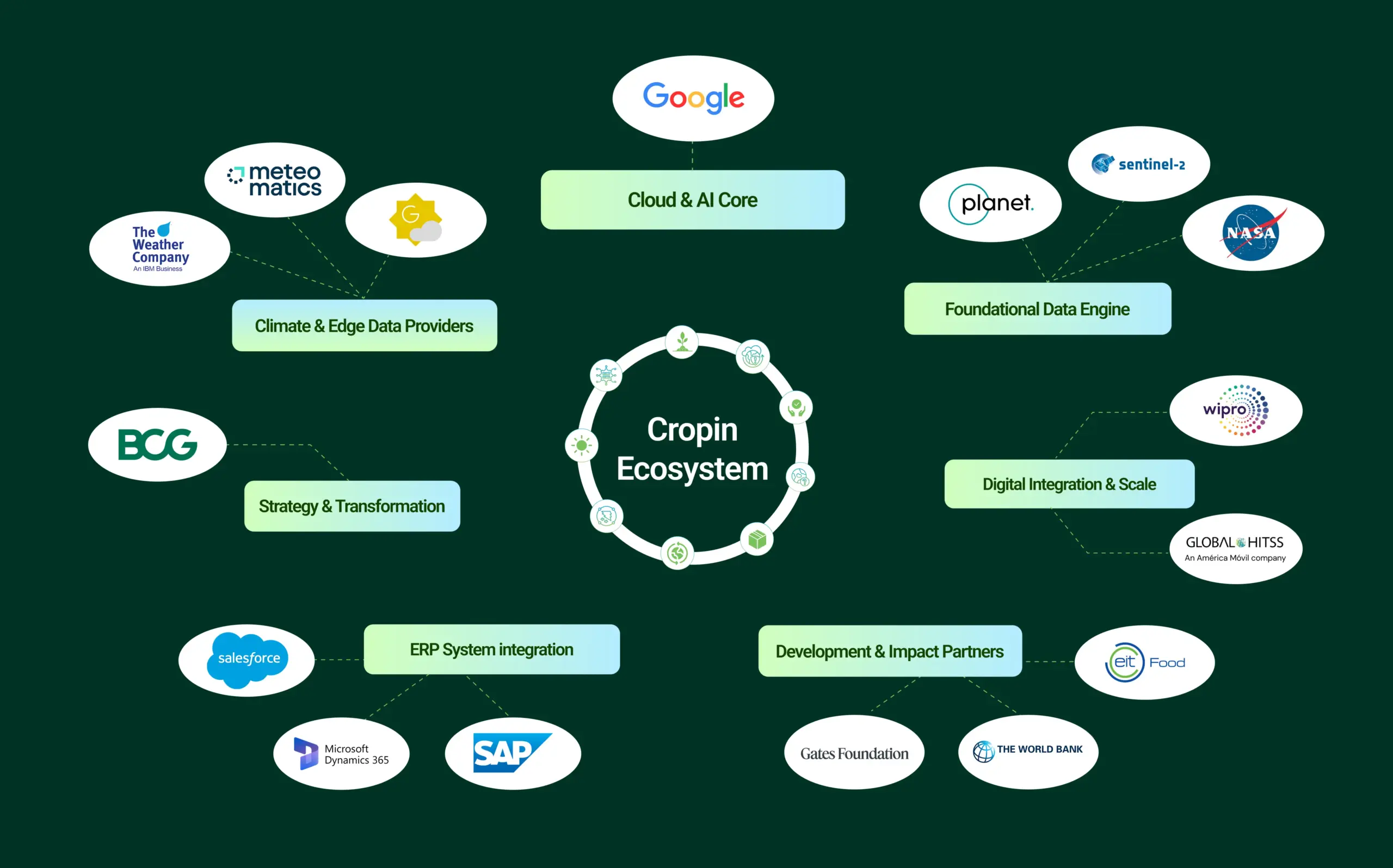
Over the years, Krishna had nurtured a larger vision, building not just a company, but an ecosystem. Agriculture cannot be solved by one entity. It is shaped by climate systems, geopolitics, trade dynamics, biodiversity, and human livelihoods. In 2025, partnerships deepened. Collaborations expanded. Missing pieces in the ecosystem began to connect.
The shift was visible in numbers too, from early pilots in the tens of thousands of dollars to multi-million, multi-year strategic contracts. The trust had compounded.
Today, Cropin stands as the world’s largest deployed AI platform for food and agriculture. Not because it chased trends. But it was determined to challenge the status quo, and remained committed to its founding principle of transforming global food systems!

The Road Ahead

Even now, agriculture’s digital transformation is just beginning. Adoption still has distance to cover. AI in agriculture is not at its peak, it is at its starting curve.
The next frontier is agentic AI, self-learning, self-evolving agricultural intelligence networks capable of autonomous adaptation.
The ambition remains what it was in 2010:
  • Make agriculture more predictable.
  • Make it more sustainable.
  • Make it more profitable.
And perhaps most importantly, make global food systems resilient in a world that is increasingly volatile.
Fifteen years ago, in that one-bedroom apartment, there were no headlines. No awards. No billion-acre intelligence networks. There was only a conviction that farmers deserved better, a better livelihood and the global food systems could be better designed.
Today, that conviction has grown into a global mission.
  • The future of food will not be accidental.
  • It will be intelligent.
  • It will be interconnected.
  • It will be built with intent.
And this time, agriculture will not be left behind.
As Winston Churchill once said, “Success is not final, failure is not fatal: It is the courage to continue that counts.”
At Cropin, that courage is what began the journey in 2010, and it is what continues to drive us forward. The work is not finished. The system is still evolving. But the commitment remains unchanged: to keep transforming global food systems until predictability, sustainability, and resilience are no longer aspirations, but standards. And we are just getting started!

Author Bio

Dileep M

Dileep leads Marketing at Cropin, where he drives brand growth and strengthens the company’s positioning across global markets. Over the last four years, he has been instrumental in shaping Cropin’s brand and demand-generation strategies that contribute to customer acquisition. He brings close to two decades of experience in communication, branding, and marketing for enterprise technology companies. With a strong focus on narrative building and strategic brand development, Dileep enables Cropin’s continued global expansion.
Similar blogs

Scroll to Top
?
?
?