
Driving transformation in the age of climate, supply chain, and geopolitical risks
These results highlight what’s possible when agri-businesses embrace AI solutions for agriculture and digital transformation in agriculture to make farming and sourcing intelligent, predictable, and sustainable.
Understanding the challenge: Unpredictability, inefficiency, and data silos
The Forrester study begins by examining the pre-transformation reality faced by large agri-food enterprises. Like many organizations in the sector, the composite company in the study struggled with:
- Fragmented, manual data collection using spreadsheets or disparate systems.
- Incomplete visibility into crop performance across geographies.
- Inability to predict risks like pest outbreaks, weather shifts, and supply shortages.
- Poor demand and supply forecasting, leading to profit leakage.
Cropin’s approach: Building intelligent, data-driven agriculture ecosystems
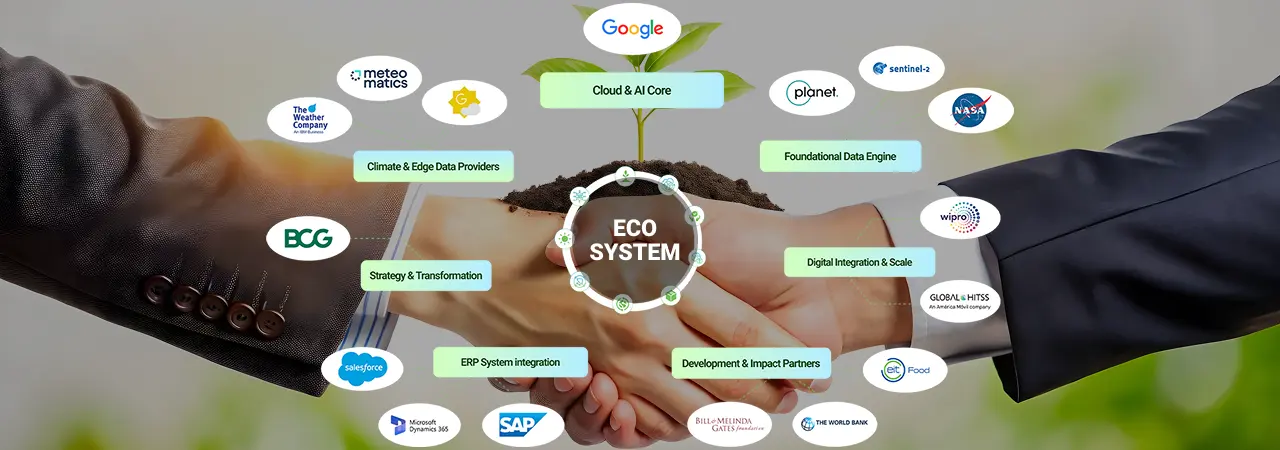
Through its Cropin Cloud platform, the company offers enterprises tools to digitize operations, drive predictability, and accelerate sustainability outcomes across their entire agri value chain.
Key benefit #1: Digitizing data collection improved efficiency by 90%
Key benefit #2: Reducing profit losses through better forecasting
Accurate forecasting is the backbone of resilient food supply chains. Before adopting Cropin, the organization faced significant profit losses due to supply-demand mismatches, overproduction in some areas, and understocking in others.
With Cropin’s platform integrating data from multiple sources, the company gained the ability to forecast with greater accuracy. AI-powered predictive models helped align supply with market demand, reducing wastage and preventing lost sales opportunities.
Key benefit #3: Improved yield visibility drove incremental profits
Unquantified benefits: Sustainability, compliance, and livelihoods
- Enhanced compliance management: Cropin’s platform provides easy access to certifications and compliance records, helping organizations stay audit-ready across global markets.
- Ethical labor practices: By enabling transparent audits at the farm level, enterprises can ensure adherence to fair labor and wage standards.
- Sustainable sourcing: Cropin’s traceability and data-driven sourcing intelligence support regenerative and climate-smart agriculture goals.
- Improved farmer livelihoods: With access to real-time data and predictive insights, farmers benefit from fairer pricing, reduced input costs, and better yield management.
The investment: Costs and implementation
- One-time implementation and data setup costs.
- Annual licensing and servicing fees.
- Internal maintenance and training costs.
Why digital transformation in upstream agriculture is non-negotiable
From data to decision to impact
- $3.9 million in total benefits over three years.
- 161% ROI.
- 90% efficiency improvement in crop data management.
As the agri-food industry navigates an era defined by climate, supply chain, and geopolitical risks, the need to digitize upstream agriculture has never been more urgent. Cropin’s AI-powered ecosystem intelligence platform is proving that transformation is not just possible, it’s profitable, scalable, and essential for a sustainable food future.
Ready to see what intelligent agriculture can do for your business?
Author Bio
Gautam Karajgi
Gautam Karajgi is the Head of Solutions and Customer Success at Cropin, the world’s largest deployed AI platform for food and agriculture, leveraging over two decades of rich and diverse experience. He has built significant expertise across strategy, impact investing, operations, and innovation in both corporate and development sectors, successfully leading projects globally. Gautam is passionate about the rapid digital transformation in agriculture and plays a pivotal role in helping Cropin’s customers adopt intelligent, data-driven solutions for measurable impact. Known for his consultative approach, he has previously been associated with leading organizations like McKinsey & Co, Innoterra AG, and Syngenta Foundation AG.