

If cocoa was the crisis of 2025, it could be rice, banana, wheat, maize, coffee, or palm oil in 2026.
Sometimes it’s climate volatility, erratic rainfall, heat stress, floods. Sometimes it’s geopolitics, export bans, sanctions, trade realignments. Sometimes it’s pandemics, port congestion, labor shortages, or transportation breakdowns. Many of these shocks are beyond human control. But not all of them.
The cost of standing still
Why delayed digital adoption is bleeding agri-food margins
Lessons from outside agriculture
When other industries faced disruption, they didn't adapt but predicted it.
Why agri-food is different and harder
Why agricultural supply risk can't be managed the same way as industrial supply chains
From visibility to Surety of Supply
- Strategic Procurement: Moving from historical guesswork to AI-driven fill rate surety.
- Global Foresight: Utilizing near-real-time monitoring to anticipate global market shifts.
- Proactive Risk Mitigation: Leveraging Early Warning Systems (DEWS) to stay ahead of pests and pathogens.
- Quality Control: Contextualizing crop health to maximize shelf life and reduce spoilage.
- Triangulated Cost Control: Executing "best price strategies" based on real-time quality and availability.
- End-to-End Traceability: Moving from "rhetorical compliance" to "audit-ready" evidence for global regulations.
- Operational Efficiency: Replacing costly manual checks with automated digital field digitization.
- Proactive Readiness: Identifying new cultivation geographies before climate shifts make current ones non-viable.
Modern agri-intelligence platforms now enable companies to:
- Predict supply risks months in advance
- Measure climate, crop, and sourcing exposure in real time
- Simulate “what-if” scenarios before disruptions hit
- Build sourcing strategies that are climate-ready, measurable, and predictable
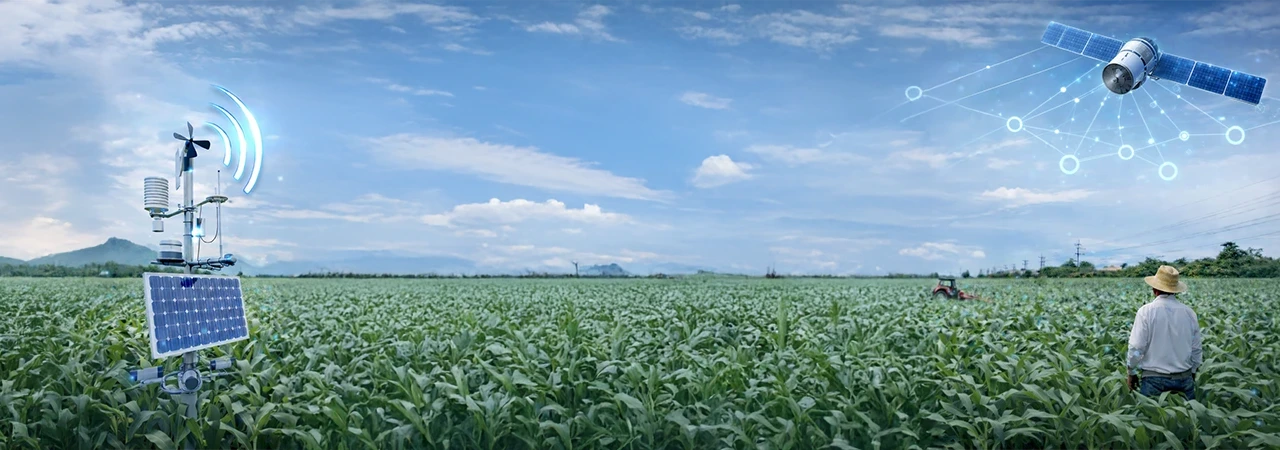
With the emergence of Agentic AI, Surety of Supply is no longer a future vision. Autonomous systems can continuously monitor risk signals, recommend actions, and adapt strategies, without waiting for manual intervention.
The 2026 playbook is already here
- Walmart is reimagining fresh produce sourcing (grapes and strawberries) through AI-driven yield estimation and quality forecasting.
- PepsiCo is neutralizing volatility for thousands of smallholder farmers using a unified AI platform for end-to-end visibility.
- Loacker is ensuring the integrity of its “Italian Hazelnut Groves” through digital verification and pest-threat mapping.
Get the Cheat Code for 2026
If you want the cheat code to build Surety of Supply in 2026 and beyond, don’t wait for the next cocoa crisis to make it obvious. Just set aside 30 minutes to read this white paper that explains Surety of Supply in CPG and Food Retail: 2025 and Beyond.
- The real problems shaping global food supply chains today
- Practical, data-driven solutions that work at scale
- Real-world examples from PepsiCo, Walmart, and Loacker
- How AI-powered decision-making is reshaping sourcing and resilience
In a world defined by climate volatility and geopolitical uncertainty, Surety of Supply is no longer a competitive advantage. It’s the minimum requirement for survival and growth.
Frequently asked questions
What is “Surety of Supply” in the agri-food industry?
Surety of supply means making sure that food companies can consistently source the agricultural products they need, even when unexpected disruptions occur. Instead of waiting for problems to happen, companies today rely on data, predictive analytics, and AI to spot potential risks early. This helps them plan ahead, diversify sourcing, and ensure that supply remains stable and reliable.
Why are global food supply chains becoming more volatile?
How much food is lost globally between harvest and retail?
How can digital transformation improve agri-food supply chains?
What role does AI play in ensuring supply chain resilience in agriculture?
Author Bio
Dileep M
Dileep leads Marketing at Cropin, where he drives brand growth and strengthens the company’s positioning across global markets. Over the last four years, he has been instrumental in shaping Cropin’s brand and demand-generation strategies that contribute to customer acquisition. He brings close to two decades of experience in communication, branding, and marketing for enterprise technology companies. With a strong focus on narrative building and strategic brand development, Dileep enables Cropin’s continued global expansion.