

A Founder’s Perspective
For many of us building in this space, that phase involved knocking on countless doors, often multiple times, to secure one or two exploratory projects; typically designed to “test the waters,” with minimal financial commitment and narrow scope. Fast forward to today, and the contrast could not be starker. Those tentative conversations have evolved into structured, large-scale RFPs for AI-first digital transformation and agri-intelligence programs, increasingly taking the shape of multi-million-dollar, multi-year contracts. This shift is not accidental, it reflects a fundamental change in how agriculture and food businesses now perceive technology: not as an experiment, but as a strategic necessity.
From Procurement to Strategy: The Evolution of RFPs in Enterprise Tech
A similar trend is now unfolding in the Agtech and Ag AI space
Where Large-Scale Agtech RFPs Are Taking Shape Today
The below domains highlight where large-scale, enterprise-grade RFPs are now evolving in the Agtech landscape.
Surety of Supply - The Force Behind Today’s Largest RFPs
At the heart of nearly every large-scale digital transformation RFP in agriculture today lies one overriding objective: Surety of Supply. For decades, supply assurance in food systems was assumed rather than engineered, built on historical production patterns and a limited number of sourcing regions. That assumption no longer holds. Climate volatility, geopolitical disruptions, regulatory pressures, and shifting consumer expectations have exposed how fragile global food supply chains truly are. As a result, enterprises are no longer asking whether technology can improve efficiency; they are asking whether it can guarantee predictability, continuity, and resilience at scale. This shift has transformed exploratory pilots into multi-million-dollar, multi-year RFPs, where AI-first agri-intelligence platforms are now expected to provide early risk signals, production certainty, diversified sourcing strategies, and real-time decision support. Surety of Supply has become the business imperative, and the primary driver behind the most consequential RFPs.
Building visibility and transparency into global food production and procurement
AI-first digital transformation for agri-intelligence and margin protection
Mitigating trade shocks and geopolitical risks through diversified sourcing
End-to-end traceability to meet regulatory and consumer expectations
Making regenerative agriculture investments measurable and outcome-driven
Delivering climate-smart agriculture (CSA) and sustainability commitments
Beyond regeneration, enterprises are using digital platforms to operationalize broader climate-smart agriculture goals, including emissions reduction, water stewardship, and biodiversity. Technology is becoming essential to track progress, validate impact, and report sustainability outcomes with confidence.
Large-scale farmer empowerment and inclusion programs
Conclusion
However, this is changing rapidly. Reports show that the connected agriculture market is growing exponentially, driven by demand for efficiency, sustainability, and resilience in food production. Smart Farming, Precision agriculture, Digitisation, IoT, and AI have the potential to significantly optimize resource use, improve productivity, and reduce waste, contributing to a more sustainable, resilient global food system. This combination of growing market scale and proven technology potential has helped elevate digital agriculture from early-stage pilots to enterprise-wide RFPs seeking comprehensive, scalable solutions.
Author Bio
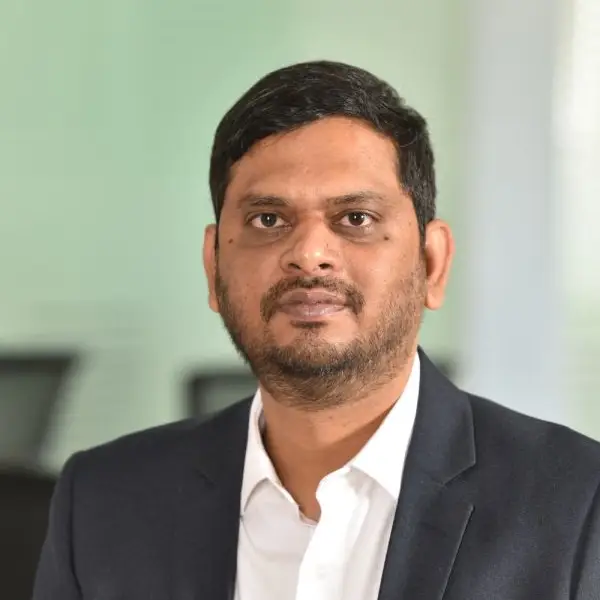
Krishna Kumar
Krishna Kumar is the Founder and Chief Executive Officer of Cropin, the world's most advanced AI platform for Food and Agriculture. He established Cropin in 2010 and pioneered the use of digital technologies and predictive intelligence. Cropin is transforming humankind’s oldest industry – agriculture into a modern, digitally connected sector. Today, Cropin has digitized over 30 million acres and empowered nearly 7 million farmers across 103 countries. Under his leadership, Cropin has introduced cutting-edge innovations, including Cropin Cloud and the industry's first real-time Gen AI platform, Cropin Sage, with the goal of building intelligence around every acre of cultivable land. Passionate about transforming global food systems through tech and data, he has also been recognized as a UBS Global Visionary, World Economic Forum Steering Committee Member, Top 10 Emerging Technologies of 2025, and serves as a non-official member of the National Startup Advisory Council.