Crop intelligence
Cocoa supply risk, tracked farm by farm.
Weather in West Africa drove the 2024 and 2025 cocoa price spike. Cropin monitors cocoa farms by satellite, predicts yield and flags black pod early; with Rainforest Alliance it identified the disease with 80% accuracy.
What Cropin tracks
Pod disease, yield and farmer reach.
Connect plot observations, Earth observation, weather and crop-specific models to production, sourcing and risk workflows.
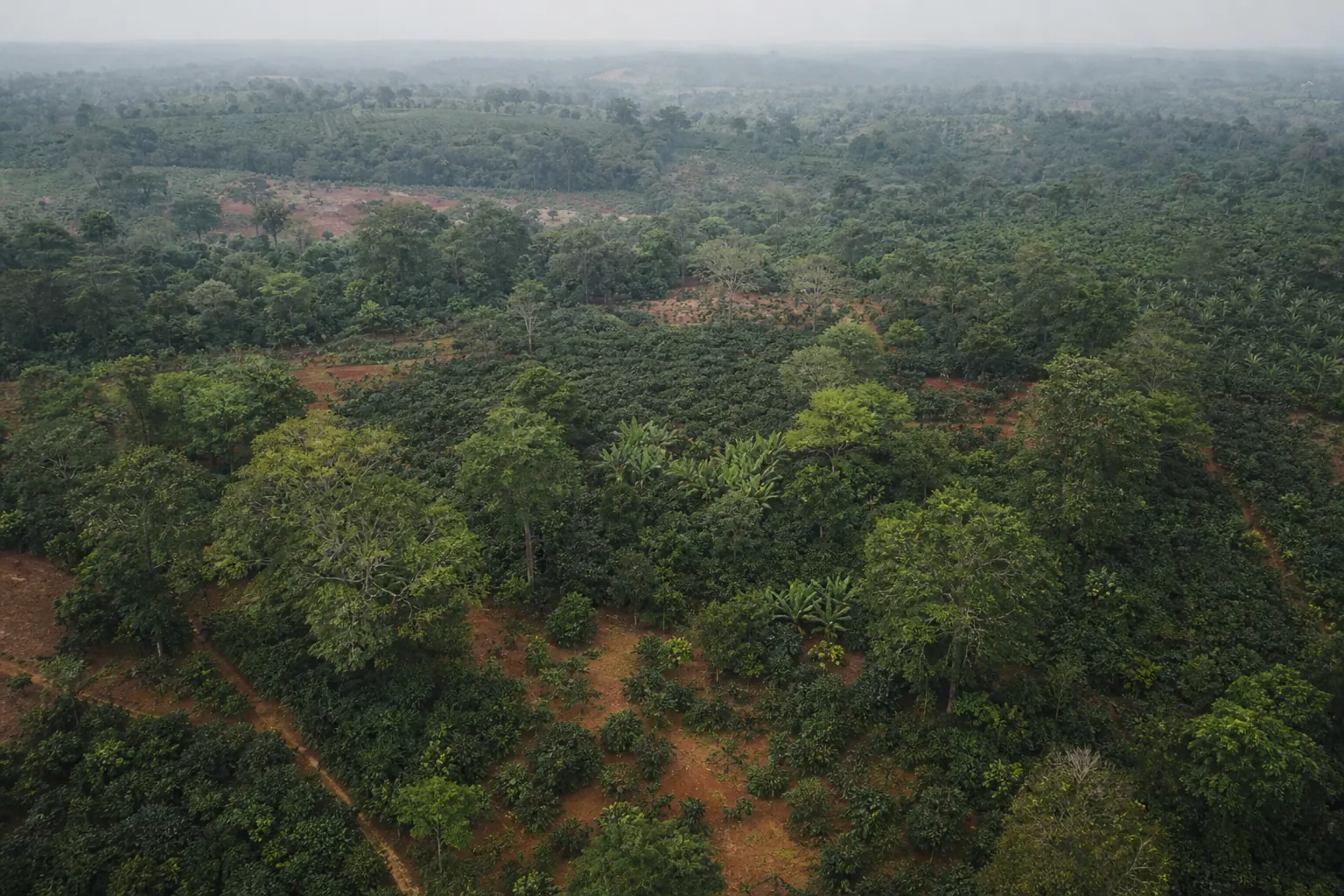
Chocolate’s value chain starts on small cocoa farms in the humid tropics.
Cocoa witnessed an unprecedented price storm in 2024 & 2025 due to severe global supply shortage driven by devastating weather conditions in West Africa. Cocoa thrives in hot, humid tropical regions. The pods of the tree contain seeds (beans), the primary raw material for chocolate.
Cocoa beans are the indispensable ingredient for chocolate, a multi-billion dollar global industry. Cocoa underpins a vast and complex global value chain that extends from small farms to multinational chocolate manufacturers, traders, and retailers. This chain creates millions of jobs and significant economic activity.
Cocoa crop stages, in order
- 1EstablishmentPlanting · shade · survival
- 2Vegetative growthCanopy · nutrition · moisture
- 3FloweringPollination · rainfall · health
- 4Pod setRetention · pest pressure
- 5Pod developmentSize · disease · crop load
- 6Bean fillingWeight · quality · nutrition
- 7Pod ripeningColor · timing · quality
- 8HarvestSelection · fermentation supply
Black pod and low farm-gate prices keep cocoa farms underinvested.
Cocoa is highly sensitive to climate change, which led to the recent price surge. Major diseases like Black Pod Disease, along with pests cause substantial crop losses annually. Despite the high value of the end product (chocolate), many smallholder cocoa farmers receive extremely low “farm-gate” prices for their beans and chronic poverty leads to underinvestment in farms.
- How programmes use Cropin on cocoa
- Enhance farmer engagement to drive sustainable cultivation
- Mitigate risks with Pest & Disease advisories
- Use AI and satellite imagery to monitor crops remotely
- Gain predictive and prescriptive intelligence for data-driven decision making
- Crop models in use
- Irrigation advisories
- On disease and pest early warning
- Black pod, Mealy bug, Tea mosquito bug, Dieback, Stem canker
With Rainforest Alliance, Ghanaian cocoa farmers tripled average yields.
- 3xGrowth in average yields of Ghanaian cocoa farmers
- 80%Accuracy identifying black pod disease
- Up to 90%Yield prediction accuracy
162,400acres of cocoa digitized on Cropin across all programmes
Deployed in 13 countries
Ghana, Nigeria, Togo, India, Philippines, Vietnam, Georgia, Switzerland, Mexico, Nicaragua, Vanuatu, Brazil, Colombia
Frequently asked questions
What is Cropin’s cocoa crop solution, and what problems does it solve?
Cropin’s cocoa solution is a digital platform that monitors cocoa farms, predicts yields, and provides real-time advisories. It helps tackle pest and disease outbreaks, climate variability, quality issues, and supply chain inefficiencies, improving farm productivity and reliability.
Why does digitization matter for the cocoa value chain?
Digitization enables better farm monitoring, traceability, and decision-making. It reduces crop losses, enhances yield and quality, improves farmer engagement, and streamlines supply chain operations from plantation to processing and market. It enables a single source of truth to verify sustainability claims, which is critical for regulations like EUDR.
What technologies are used in Cropin’s cocoa solution?
Cropin uses AI, remote sensing, and mobile applications to provide actionable insights, monitor crop health, forecast yields, and guide interventions for sustainable and optimized cocoa cultivation. It offers custom dashboards for a single platform view across operations.
How does Cropin support cocoa plantation digitization and farmer profiling?
Cropin digitizes plantations and profiles farmers by capturing field-level data, tracking growth stages, monitoring farm practices, and mapping plots, enabling personalized advisories, improved compliance, and efficient farm management across large cocoa operations.
How does Cropin help cocoa enterprises comply with the EU Deforestation Regulation (EUDR)?
Cropin provides the digital infrastructure to map farm boundaries (polygons) and cross-reference them with satellite imagery. It provides digital Measurement, Reporting, and Verification (dMRV) to validate deforestation claims. This ensures cocoa is not sourced from land deforested after the December 2020 cutoff, providing the “due diligence” documentation required for the European market.
How does Cropin help manage the risk of diseases like "Black Pod Disease" (Phytophthora) in cocoa?
Black Pod is a major threat in humid cocoa-growing regions. Cropin’s predictive models analyze rainfall and humidity levels to disseminate “Early Warning Alerts.” Farmers receive advisories on pruning and timely fungicide application to prevent the spread of the fungus across the plantation.
How does the platform handle data in "Remote Cocoa Clusters" with low connectivity?
The Cropin mobile application is designed with “Offline-First” capabilities. Field agents can capture farm polygons, crop photos, and farmer data in remote forest areas without internet access. The data automatically syncs to the cloud once the agent reaches a location with a stable connection.
Other crops on the platform
Cocoa runs on the same platform as 400+ other crops: field records, satellite observation, weather and crop models, read together through the Crop Knowledge Grid.