Crop intelligence
Cotton plot audits, practice tracking and pest alerts.
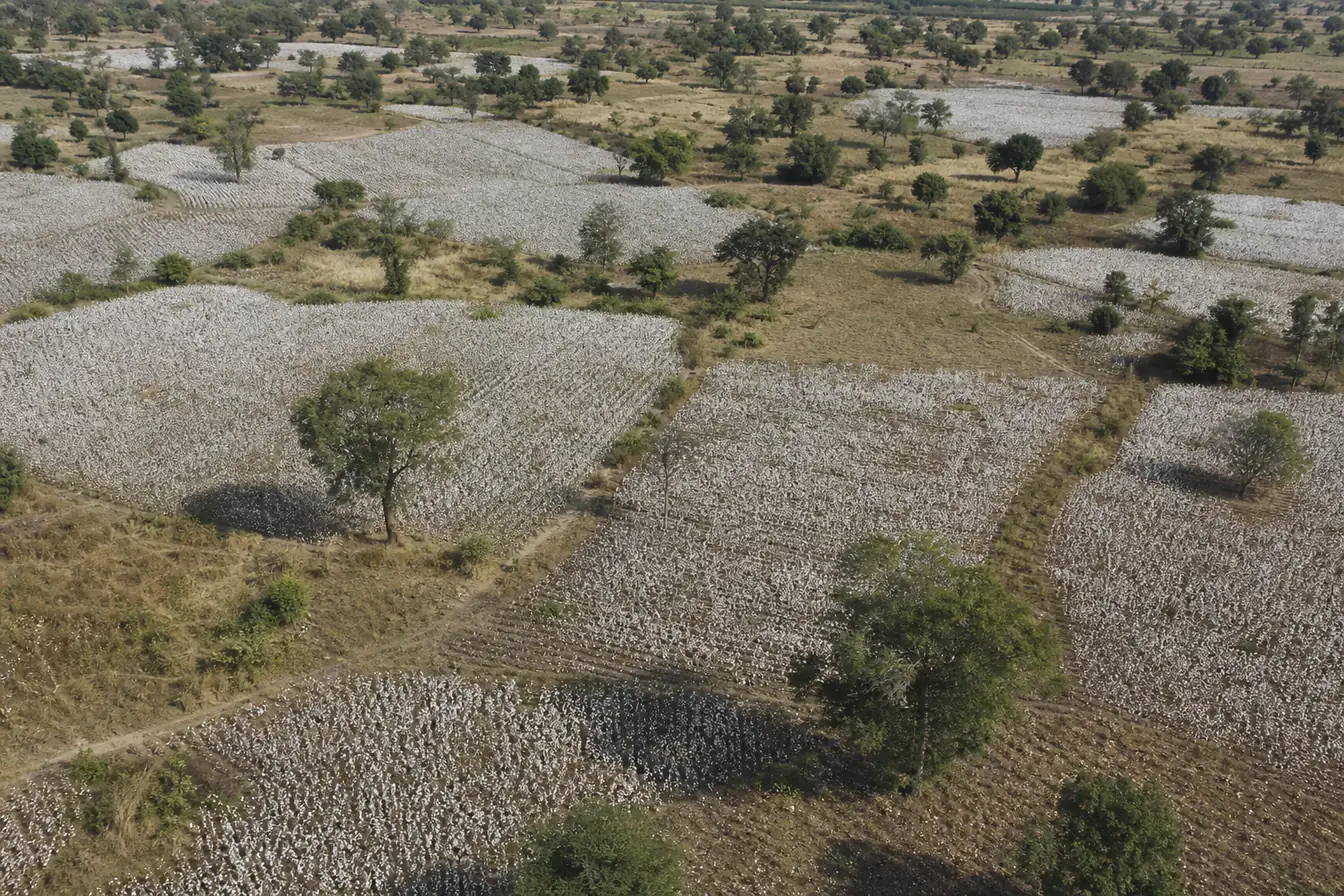
Cotton is water-hungry and pest-prone. Cropin audits plot areas, tracks package-of-practices compliance, runs satellite health checks and keeps a farmer payment ledger; one program has digitized more than 120,000 cotton farmers.
What Cropin tracks
Practice compliance, plant health and water use.
Connect plot observations, Earth observation, weather and crop-specific models to production, sourcing and risk workflows.
Cotton makes up about half of all textiles produced worldwide.
Cotton is a woody perennial shrub typically cultivated as an annual crop, exhibiting an indeterminate growth habit. They can continue to grow vegetatively while also producing flowers and bolls making them highly sensitive to environmental conditions. It is primarily harvested for its fibers, however all parts of the cotton plant have value.
Cotton is the most widely used natural fiber globally, making up approximately half of all textiles produced. Cotton production provides income and livelihoods for over 250 million people worldwide, particularly in developing countries.
Cotton crop stages, in order
- 1PlantingVariety · soil · moisture
- 2EmergenceStand · vigor · weather
- 3Vegetative growthCanopy · water · nutrition
- 4SquaringBud retention · pest risk
- 5FloweringPollination · heat stress
- 6Boll formationLoad · water · protection
- 7Boll openingFiber quality · weather
- 8Harvest readinessDefoliation · quality · yield
Cotton draws heavily on water and attracts sap-sucking pests.
Cotton is often considered a water-intensive crop that places immense pressure on water resources and can contribute to water scarcity and environmental degradation. Cotton is highly vulnerable to a wide array of pests, sap-sucking insects, and is sensitive to climate variability.
- How programmes use Cropin on cotton
- Audit cotton plot areas, crop details, and monitor PoP activities
- Process plots with satellite images for health indices
- Track payments & financial transactions with a farmer ledger
- Access a comprehensive MIS with interactive dashboards & reports
- Crop models in use
- Crop yield, Crop stage, Crop progression, Harvest window estimation, Crop health indicators, Irrigation advisories
- On disease and pest early warning
- Fusarium wilt, Root rot, Alternaria leaf blight, Cercospora leaf spot, Bacterial blight
Nacoton’s cotton app runs in 29 languages across several countries.
- Timely agronomy and weather advisories
- 29+Languages supported across countries
- 120,000+Cotton farmers, farms and varieties digitized
- 180+Field officers trained on the app
- 0.8MAcres digitized on the Cropin platform
1,814,411acres of cotton digitized on Cropin across all programmes
Deployed in 17 countries
Angola, Kenya, Malawi, Mozambique, Nigeria, Zambia, India, Japan, Myanmar, Russia, Tajikistan, Andorra, Germany, Anguilla, Mexico, USA, Brazil
Further reading
- NACOTANCase study
- Mozambique’s cotton productivity transformationImpact project
- Cropin triumphs at the better cotton innovation challengeInsight
Frequently asked questions
What is "Package of Practices (PoP) monitoring" in cotton farming, and why does Cropin track it?
The Package of Practices (PoP) refers to the standard agronomic steps recommended for cotton cultivation, including sowing, fertilization, irrigation, pest control, and harvesting. Cropin provides PoP alerts, tracks PoP compliance using digital tools and field updates to ensure farmers follow best practices, which improves yield, reduces crop losses, and maintains fiber quality.
How does Cropin help cotton programs manage operations across multiple countries and languages simultaneously?
How do diseases threaten the yield and fiber quality of cotton? Give an example of a disease and how Cropin's DEWS can mitigate this risk in cotton crops?
How does Cropin address cotton's reputation as one of the world's most water-intensive crops?
How does satellite imagery help monitor cotton boll development and predict harvest windows?
How is Cropin raising cotton productivity in regions like Mozambique?
How does the platform handle the "Last Mile" challenge in fragmented cotton clusters?
What role does AI play in managing cotton pests?
How does Cropin improve the quality and "Staple Length" of cotton?
Other crops on the platform
Cotton runs on the same platform as 400+ other crops: field records, satellite observation, weather and crop models, read together through the Crop Knowledge Grid.