Crop intelligence
Sugarcane yield and harvest windows for mill planning.
Cane yield and quality depend on weather, pests and harvest timing. Cropin forecasts yield at plot and regional level and finds harvest windows; Mansa Sugar managed 38,000 tonnes of harvest with it.
What Cropin tracks
Crop progression, stress and harvest windows.
Connect plot observations, Earth observation, weather and crop-specific models to production, sourcing and risk workflows.
Sugarcane supplies about 80% of the world’s sugar.
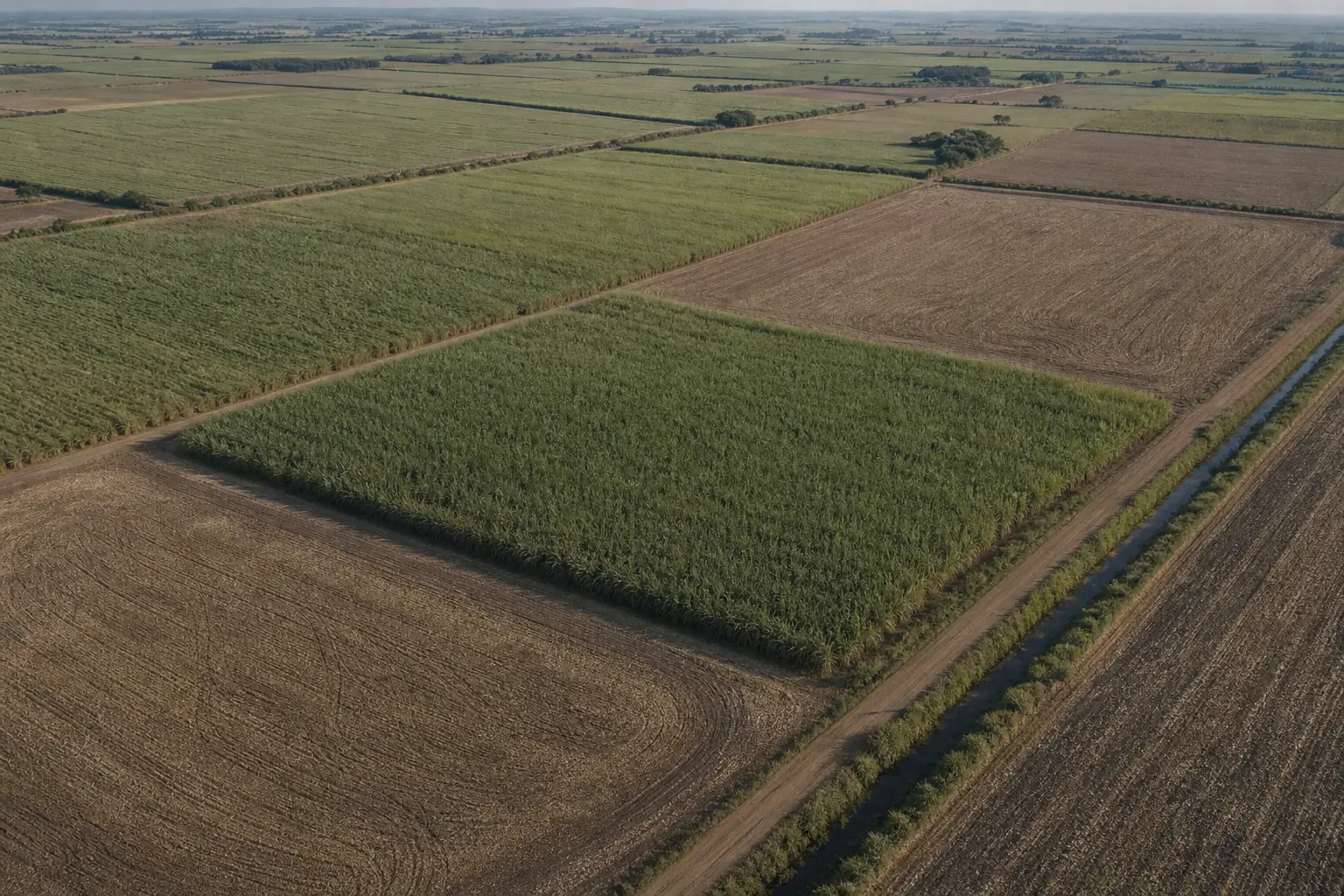
Sugarcane, a tall perennial grass, contains a high concentration of sucrose (sugar), making it the world’s largest source of sugar. They thrive in warm, humid climates with ample sunshine and rainfall, like tropical and subtropical regions. Uses of sugarcane include a source of sugar, ethanol production, biofuel for electricity generation, and as a key ingredient in animal feed.
Sugarcane accounts for approximately 80% of the world’s total sugar production. The sugarcane industry provides livelihoods for millions of small-scale farmers and factory workers across the globe. It supports large-scale industrial operations as well as smallholder farms, playing a vital role in rural economies in many tropical countries.
Sugarcane crop stages, in order
- 1Land preparationSoil · drainage · layout
- 2Sett plantingVariety · depth · spacing
- 3GerminationEmergence · stand · vigor
- 4TilleringShoot count · nutrition · water
- 5Grand growthElongation · canopy · stress
- 6Sugar accumulationBrix · water · temperature
- 7MaturityRipeness · lodging · quality
- 8Harvest readinessCut window · mill supply
Extreme weather, pests and price swings squeeze sugarcane producers.
Sugarcane cultivation faces significant challenges from climate change and extreme weather, which severely impact yields and quality, while pest and disease pressure remains a constant threat. Compounded by price volatility, operational inefficiencies, and slow technological adoption, the industry struggles to meet growing demand sustainably.
- How programmes use Cropin on sugarcane
- Detect crop health issues early & boost per-acre productivity
- Accurately forecast yields at the plot & regional level
- Track crop progression & optimize farm decisions
- Identify harvest windows to optimize procurement & processing planning
- Crop models in use
- Crop yield, Crop stage, Crop progression, Harvest window estimation, Crop health indicators, Irrigation advisories
- On disease and pest early warning
- Smut, Fusarium wilt, Grassy shoot
Mansa Sugar tracks input use plot by plot against the package of practices.
- Real-time alerts that identify stressed areas so farmers can act early
- 38,000Tonnes of harvest managed
- 1,500Hectares of land digitized
183,524acres of sugarcane digitized on Cropin across all programmes
Deployed in 6 countries
India, Zambia, Thailand, Mexico, Myanmar, Brazil
Further reading
Frequently asked questions
What is Cropin’s sugarcane crop solution, and why is it needed?
Cropin’s sugarcane solution is a digital platform that helps growers, agribusinesses, and mills monitor, manage, and optimize sugarcane crops using real-time data and AI insights. It is needed because sugarcane cultivation faces unpredictability from weather, pests, diseases, and inefficient field operations, making data-driven decisions essential for higher yields and lower losses.
What key challenges in sugarcane cultivation does Cropin address?
Cropin tackles several major challenges:
- Crop health monitoring to detect stress and address operational inefficiency
- DEWS alerts to mitigate pest & disease pressure
- Yield forecasting to plan harvest and processing.
- Optimal harvest scheduling for improved supply chain efficiency.
- Field-level tracking and digitization to reduce manual errors and operational gaps.
- Advisories to optimize input costs and mitigate environmental concerns
- An easy-to-adopt platform to overcome resistance to the adoption of innovation & technology
- Irrigation advisories to handle water scarcity across many regions
Who benefits from using Cropin’s sugarcane solution?
- Farmers: receive actionable insights to improve crop health and productivity.
- Sugar mills: get accurate yield forecasts for better harvest planning.
- Agribusinesses & supply chain managers: gain operational visibility across large cultivation areas for efficient decision-making.
What technologies power Cropin’s sugarcane crop solution?
Cropin combines multiple technologies:
- AI & machine learning for yield prediction and pest/disease detection.
- Remote sensing & satellite imagery for crop health monitoring.
- Mobile apps for field teams to capture data and take timely action.
- Cloud dashboards for real-time tracking and analytics.
How does Cropin optimize the "Harvest to Mill" supply chain?
Sugarcane starts losing sucrose content the moment it is cut. Cropin’s platform synchronizes harvest schedules with mill capacity. By predicting the “Peak Maturity” of specific plots, the system ensures that the cane reaches the factory at its highest sugar content, minimizing “post-harvest losses.”
How does the platform help in "Sugar Recovery" (CCS) optimization?
The Commercial Cane Sugar (CCS) percentage is critical for mill profitability. Cropin uses satellite-derived indices to monitor crop health and moisture levels. By identifying fields that have reached physiological maturity, mills can prioritize those for harvesting to maximize sugar recovery.
How does Cropin assist in "Pest and Disease Management" for sugarcane?
Cropin’s “Disease Early Warning Models” analyzes climatic conditions and historical trends to alert field officers about potential outbreaks. Field agents then use the mobile app to conduct “Geo-tagged Scouting,” allowing for localized treatment rather than blanket chemical application.
Other crops on the platform
Sugarcane runs on the same platform as 400+ other crops: field records, satellite observation, weather and crop models, read together through the Crop Knowledge Grid.