Crop intelligence
Potato yield, forecast 30 to 45 days out.
Cropin digitized PepsiCo’s potato value chain, with 90% weather-prediction accuracy and 87% disease early-warning accuracy across crop stage, blight and water stress.
Decisions improved
Seed planning, blight risk and factory intake.
Cropin combines field operations, Earth observation, weather and crop-specific models to create a shared view of potato production.
Powered by Crop Knowledge Grid
Crop-specific context makes the signal useful.
Variety, phenology, agronomy, regional growing conditions and historical observations help models interpret what is changing in a potato field.
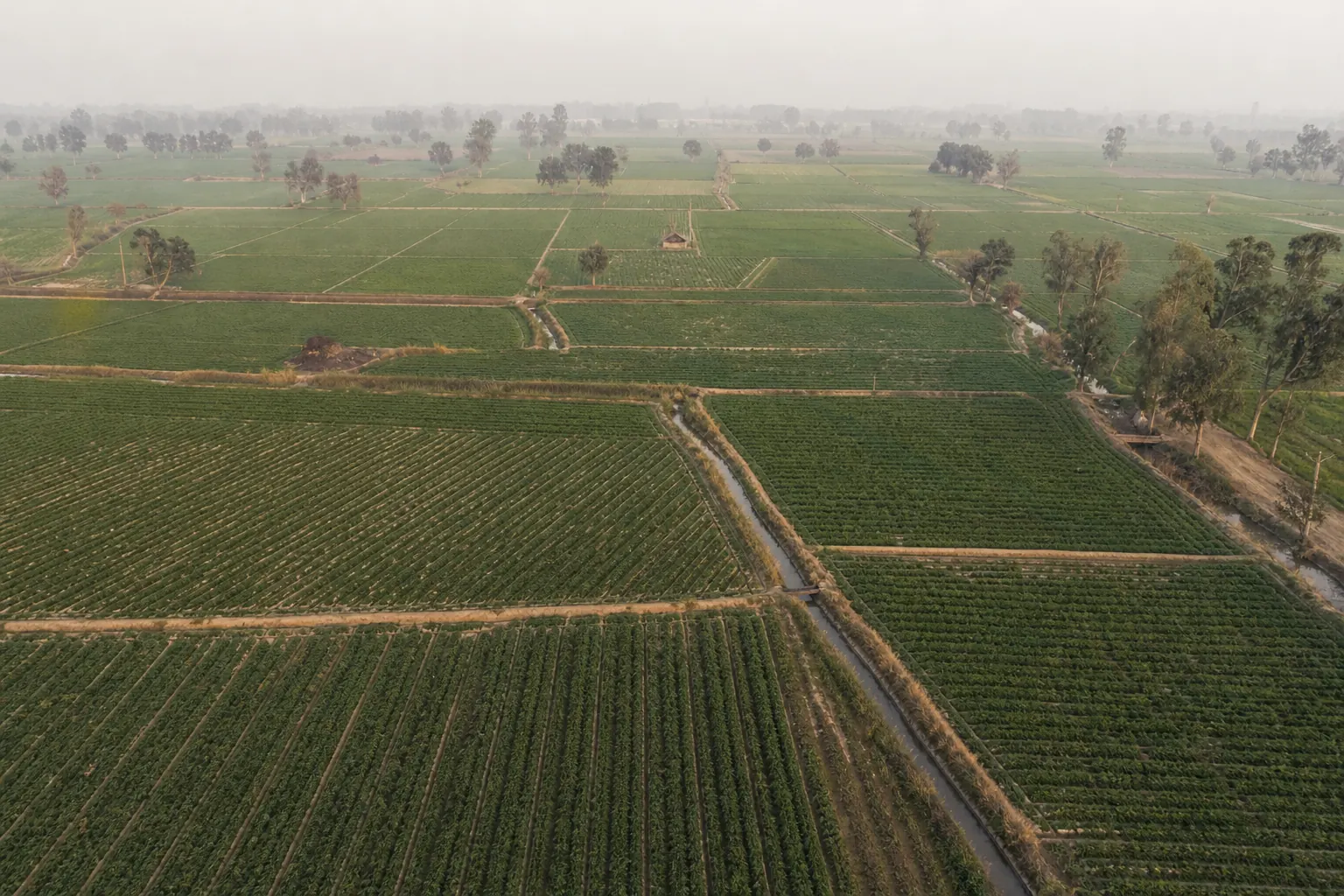
Potato produces more food per acre, and faster, than most staple crops.
Potato is the third most important food crop in the world, in terms of human consumption.
Potatoes are remarkably adaptable, growing in diverse climates from high altitudes to arid plains and temperate regions, and produce more food per unit of land & in less time than most other major staple crops.
Potato crop stages, in order
- 1Land preparationSoil structure · drainage
- 2Seed tuber plantingDepth · spacing · vigor
- 3EmergenceStand count · early stress
- 4Vegetative growthCanopy · nutrition · health
- 5Tuber initiationSet · water · temperature
- 6Tuber bulkingSize · dry matter · disease
- 7MaturationSkin set · senescence
- 8Harvest readinessWindow · quality · supply
Early blight, late blight and bacterial wilt decide potato yield and quality.
Potato cultivation is significantly impacted by pests & diseases affecting yield, & quality.
- How programmes use Cropin on potato
- Predict crop yield 30-45 days before harvest
- Weather models for harvest planning and irrigation management
- Geo-tagged plots for end-to-end visibility
- Optimize water use for soil types to enhance productivity
- Support procurement planning and productivity
- Crop models in use
- Crop yield, Crop stage, Crop progression, Harvest window estimation, Crop health indicators, Irrigation advisories
- On disease and pest early warning
- Early blight, Late blight, Bacterial wilt
Canopy, nitrogen and disease models, validated in PepsiCo’s potato fields.
- 84%Canopy greenness accuracy
- 80%Nitrogen uptake accuracy
- 87%Disease early warning accuracy
- 90%Weather prediction accuracy
273,707acres of potato digitized on Cropin across all programmes
Deployed in 28 countries
India, Indonesia, Myanmar, Philippines, Pakistan, Bangladesh, Sri Lanka, Vietnam, China, Belgium, France, Italy, Netherlands, Portugal, Switzerland, United Kingdom, Canada, USA, Argentina, Mexico, Brazil, Angola, Egypt, Kenya, South-Africa, Nigeria, Tanzania, Australia
Frequently asked questions
How does Cropin help in maximizing potato yield and tuber quality?
Cropin provides AI-driven crop intelligence and real-time monitoring to support better decision-making throughout the potato lifecycle. The platform tracks crop stage progression, canopy greenness, nutrient uptake, and crop health indicators, helping farmers apply the right fertilizers and crop protection practices at the right time and optimize irrigation. Disease Early Warning Systems (DEWS) also identify risks such as early blight, late blight, and bacterial wilt, enabling timely interventions that improve yield and tuber quality.
How does Cropin ensure "Surety of Supply" for potato processors?
Cropin digitizes farms and provides end-to-end visibility across potato cultivation areas, enabling processors to monitor crop progress and forecast production early. 45-day advanced yield predictions, crop health insights, and harvest window estimation help procurement teams plan sourcing and logistics, reducing supply disruptions and ensuring a consistent flow of potatoes for processing operations.
Can Cropin monitor "Water Stress" without soil sensors and provide irrigation advisories?
Yes. Cropin uses satellite imagery, weather models, and AI-based analytics to assess crop health and soil moisture conditions. Through its Water Stress Index, the platform can estimate moisture levels and recommend irrigation schedules even without physical soil sensors. This helps farmers maintain optimal soil moisture for healthy tuber development.
What is Cropin’s expertise in potato farming, and what does it mean for new users?
Cropin has extensive experience in digital agriculture and has digitized more than 273,700 acres of potato farmland globally, providing insights on crop growth, health, and productivity. This extensive expertise and contextualized deep learning models offer best-practice recommendations and crop intelligence that new users can immediately benefit from when adopting digital potato farming.
How does the platform support Potato Seed Certification?
Cropin enables traceability and monitoring throughout the seed production lifecycle. Using technologies such as QR-code tagging and digital tracking, the platform helps stakeholders trace seed origin, verify certified varieties, and monitor seed multiplication processes. This ensures that farmers receive high-quality, certified seed potatoes while improving transparency and trust across the supply chain.
What role does Cropin play in "Regenerative Potato Farming"?
Cropin supports regenerative potato farming through data-driven advisory systems that optimize water use, reduce pesticide & fertilizer application, and improve soil health. AI-powered insights help farmers adopt sustainable practices while maintaining productivity. Cropin’s Decision Support Systems are projected to increase yields, reduce pesticide usage, lower water consumption, and improve tuber quality, supporting both environmental and economic goals.
Can Cropin help identify new regions for potato cultivation?
Yes. Cropin analyzes climate patterns, soil conditions, and historical crop data to identify regions suitable for potato cultivation. In real-world deployments, the platform has helped organizations discover high-potential growing areas and expand cultivation zones to secure a consistent potato supply.
How far in advance can Cropin predict potato crop yield, and how does this help businesses?
Cropin’s AI models can predict potato yield approximately 30-45 days before harvest using its proprietary crop knowledge grid, satellite data, and weather data. Early yield visibility helps food processors and agribusinesses plan procurement, manage supply chains, optimize inventory, and reduce operational risks associated with uncertain crop production.
What diseases does Cropin's Disease Early Warning System (DEWS) detect in potato crops
Cropin’s DEWS monitors key potato diseases and predicts risks before they occur. This includes diseases like early blight, late blight, and bacterial wilt, helping farmers take timely preventive action to minimize crop loss.
In how many countries is Cropin's potato intelligence currently deployed?
Cropin’s potato intelligence solution is deployed across 26+ countries, including India, China, the USA, the UK, the Netherlands, Brazil, Kenya, and more, supporting farmers and agribusinesses worldwide.
What real-world results did PepsiCo achieve using Cropin's potato intelligence platform?
Using Cropin’s platform, PepsiCo achieved:
- 90% weather prediction accuracy
- 87% disease early warning accuracy
- 87% crop stage progression accuracy
- 84% canopy greenness accuracy
- 80% nitrogen uptake and water stress monitoring accuracies
These insights helped PepsiCo optimize yield forecasting, irrigation, disease management, and supply planning for potato crops.
What growth stages of the potato crop does Cropin monitor, and what actions does each stage trigger?
Cropin tracks all key growth stages, from sprout emergence to tuber formation and maturity. Some examples of actionable guidance the system provides at each stage include:
- Vegetative stage: alerts for irrigation and nutrient needs
- Tuber bulking stage: monitoring for water stress and nutrient optimization
- Susceptible stages: early disease warning alerts
- Pre-harvest stage: harvest planning and scheduling insights
Other crops on the platform
Potato runs on the same platform as 400+ other crops: field records, satellite observation, weather and crop models, read together through the Crop Knowledge Grid.