
How the EU Deforestation Regulation Are Driving Europe’s Sustainable Agriculture Transformation

Table of contents

There is a quiet but consequential transformation underway in Europe’s fields, supply chains, and boardrooms. It is not driven by a single breakthrough or a single harvest season. It is the result of years of deliberate policy-making, courageous investment, and a sustainable n agricultural sector willing to ask a harder question than “how much can we produce?”, and instead ask, “how do we produce in a way that lasts?”
Europe has emerged as one of the world’s most ambitious architects of sustainable food systems. And as that ambition moves from strategy to statute, it is reshaping not just how European farmers grow food, but how the entire global agri-food industry must think about production , sourcing and accountability setting a benchmark for sustainable agriculture
For companies like Cropin, whose AI-powered platform monitors, manages, and supports sustainable agriculture across 30 million digitised acres in over 100 countries, Europe is not simply a market. It is one of the most exciting and consequential theatres for the future of food.

Europe's Agri-Food Regulatory Framework: The Farm to Fork Strategy and EUDR.

To understand why Europe leads, you have to start with the ambition of its regulatory architecture. No other continent has attempted anything quite like it.
The European Green Deal, launched in 2019, set a defining target: for Europe to become the world’s first climate-neutral continent by 2050. Agriculture sits at the heart of this ambition. The agri-food sector accounts for approximately 32% of Europe’s total emissions, making sustainable food systems not a peripheral policy priority, but a central pillar of the continent’s climate strategy.

The Farm to Fork Strategy, unveiled in 2020 as the Green Deal’s agri-food blueprint, set a series of bold 2030 targets that have no parallel in scale or specificity anywhere in the world. These include:

  • Reducing the use and risk of chemical pesticides by 50%
  • Cutting nutrient losses by 50% while reducing fertiliser use by 20%
  • Expanding organic farmland to at least 25% of total agricultural area
  • Reducing food waste by 50% at retail and consumer levels
These are not aspirational statements. They are policy commitments backed by the Common Agricultural Policy (CAP), the EU’s largest single budget line at over one-third of total EU spending, which is now being reoriented to tie subsidies and eco-scheme funding directly to sustainability outcomes.
In February 2025, the European Commission published its Vision for Agriculture and Food 2025–2029, charting the course for the next phase of sustainable transition, emphasising the link between farmer prosperity, resilience, and ecological regeneration. Europe is not slowing down. It is accelerating.

EU Deforestation Regulation (EUDR) and European Green Deal: How Europe's Sustainability Laws Are Redefining Global Food Supply Chains
Alongside its domestic transformation, Europe is rewriting the terms of global trade.

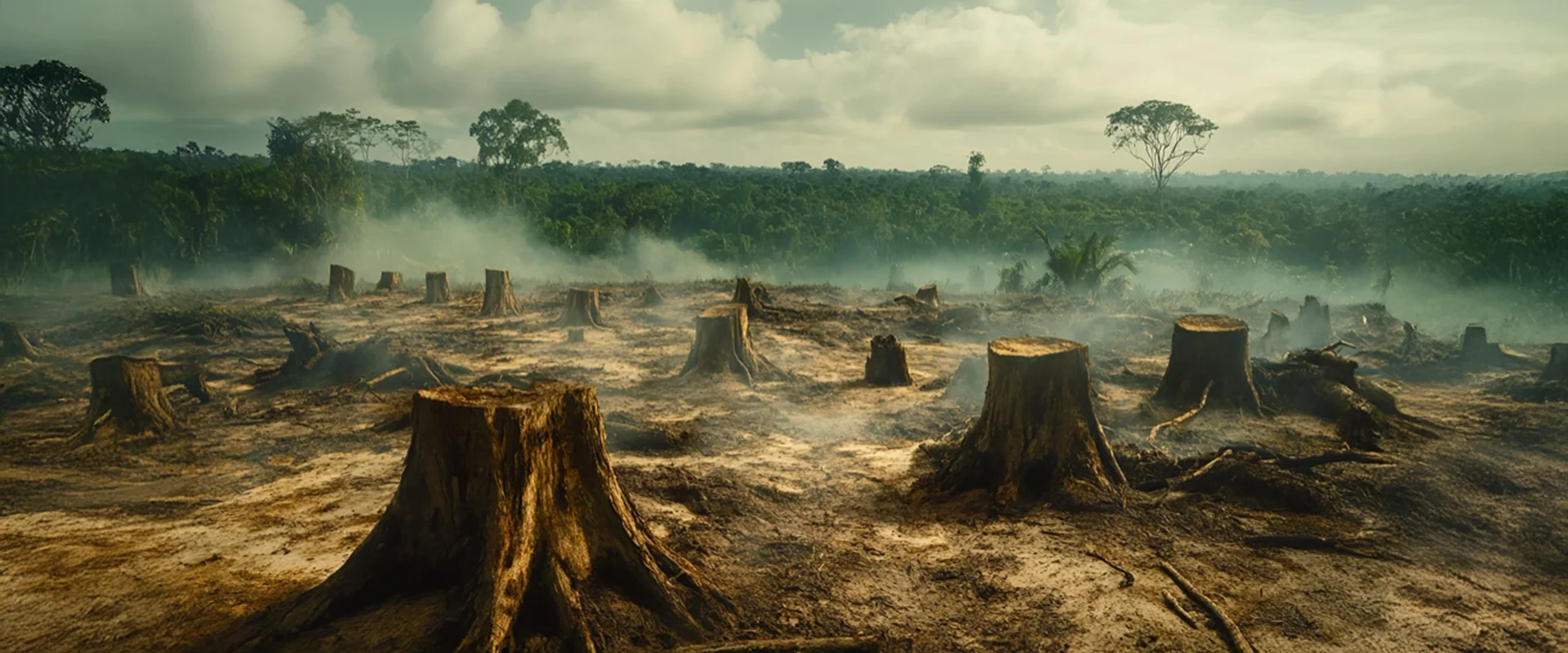
The EU Deforestation Regulation (EUDR), which entered into force for large companies from December 2025, is arguably the most consequential agricultural regulation in a generation. It requires that seven key commodities, cattle, cocoa, coffee, palm oil, soy, wood, and rubber, placed on the EU market must not have contributed to deforestation or forest degradation anywhere in the world after December 2020.

This is not a checkbox compliance requirement. It demands verified, geo-referenced, plot-level data for every shipment entering the EU. It means that supply chain visibility, knowing exactly which farm a product came from, what land it was grown on, and whether that land was deforested, is now a legal prerequisite for market access.
The Corporate Sustainability Reporting Directive (CSRD) extends this logic further. Large companies operating in or trading with Europe must now report comprehensively on their environmental and social impacts across their entire value chain. The era of self-reported, unverified ESG narratives is over. What CSRD demands is credible, auditable data, the same rigour applied to financial reporting, now applied to sustainability.
The Corporate Sustainability Due Diligence Directive (CS3D) goes a step further still, requiring companies to actively identify and address adverse impacts on human rights and the environment, not just within their own operations, but through their supply chains.
Together, these regulations represent something profound: Europe has decided that the true cost of food must be visible, verifiable, and accounted for, and it is using its market power to raise the bar for the entire global food system. This is the continent saying, with legal force, that sustainability is the price of entry.

Why European Farmers Are at the Forefront of the Sustainable Agriculture Transition
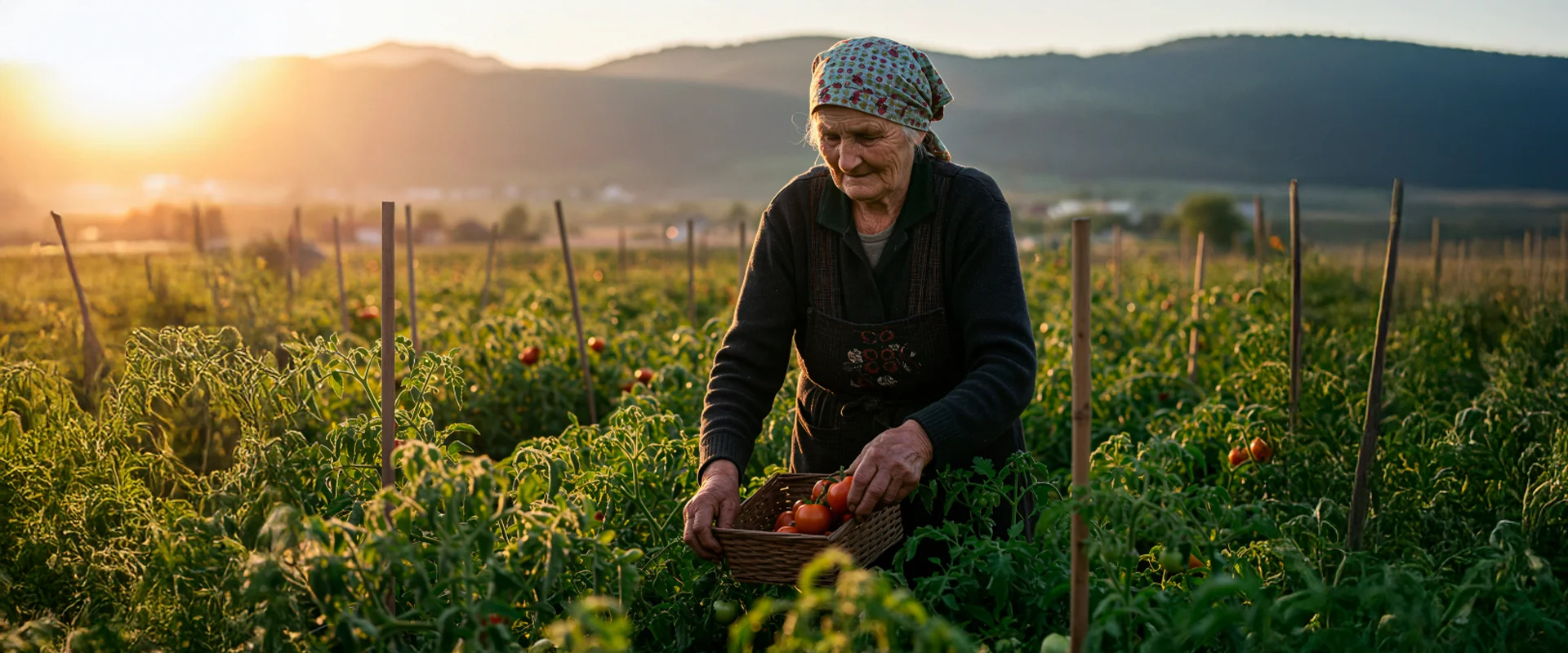
Behind the policy architecture are the people making it real, Europe’s 10 million farms, farming across more than 156 million hectares.

European farmers are navigating a challenging but genuinely transformative moment. Many are being asked to change practices that have sustained their livelihoods for generations, to adopt regenerative methods, reduce inputs, and invest in soil health, often with short-term economic uncertainty. That tension is real and deserves acknowledgement.

And yet, across the UK, Denmark, Germany, the Netherlands, Italy, and beyond, a new kind of farming is taking root. Farmers who have adopted precision agriculture are demonstrating that sustainability and profitability are not opposites, that smarter input use reduces costs, that healthier soils produce better crops, and that verified sustainability opens premium market opportunities that conventional farming cannot access.
The shift is measurable. In 2024, the McKinsey Global Farmer Insights Survey found that 68% of farmers surveyed had adopted crop rotations, 56% had implemented reduced or no-till methods, and 40% were already using variable-rate spraying. European agri-food brands, from premium confectionery to large-scale food processors are committing to regenerative sourcing not as a luxury but as a supply chain necessity.

AI in Agriculture: Why Precision Farming Technology Is Essential for EUDR and farm to fork strategy in Europe

Here is the challenge that Europe’s ambition surfaces. Setting sustainability targets is the first act. Measuring, verifying, and scaling them is the harder second.
The EUDR requires plot-level deforestation data for every commodity entering the EU. The CSRD requires scope 3 emissions reporting across supply chains. Regenerative agriculture programmes require verified soil health outcomes to attract investment. Precision agriculture requires hyper-local advisories that generic weather forecasts and agronomic manuals simply cannot provide.
This is the intelligence gap, the space between the ambition of Europe’s sustainability vision and the data infrastructure required to deliver it. And this is precisely where Cropin operates.

How Cropin’s Agricultural Intelligence Platforms Are Enabling Sustainable Agriculture Compliance Across Europe.

Cropin is the world’s most widely deployed AI platform for food and agriculture, with over 1 billion acres of croppable land computed, 30 million acres digitised across 103 countries, and a platform that integrates satellite imagery, IoT sensors, weather intelligence, and field observations into real-time, plot-level agricultural intelligence.
In Europe, Cropin is not simply responding to the continent’s sustainability demands. It is actively shaping how they are delivered.

EUDR Compliance Through Digital MRV

For agri-food companies navigating the EU Deforestation Regulation, Cropin’s digital Monitoring, Reporting, and Verification (dMRV) platform provides the data backbone that compliance demands. Its Land Use Land Cover (LULC) models use satellite data to verify field boundaries, detect land use change, monitor deforestation in near real-time, and produce the geo-referenced, timestamped evidence trail that EUDR due diligence obligations require. Compliance, in this framework, is not a burden, it is a verified record of responsible sourcing.

FIRST Potato: Europe-wide regenerative agriculture deployment
In one of its most significant European commitments to date, Cropin has secured a €700,000 strategic contract under EIT Food’s Impact Funding Framework to deploy FIRST Potato; Field Intelligence for Regenerative Agriculture and Sustainability in Potato Farming across Europe.
The programme brings together a consortium of food processors, research institutions, and sustainability leaders, with pilot farms in Denmark and commercial deployments with two major potato processors in Germany and the UK. Aarhus University, one of Europe’s foremost research institutions in sustainable agriculture, has partnered with Cropin to provide independent scientific validation of outcomes.
FIRST Potato is built on Cropin’s AI-powered Decision Support System (DSS), which integrates real-time data from in-field sensors, satellite imagery, weather stations, and IoT devices to deliver plot-specific daily advisories tailored to each farm’s unique soil profile and microclimatic conditions. The programme targets a 5% yield increase, 15% pesticide reduction, 5% lower water use, and up to €410 per hectare in economic benefit, demonstrating that regenerative agriculture, when supported by the right intelligence, is commercially compelling, not just environmentally necessary.
For potato processors, this matters enormously. Processors seek high-solid-content tubers for product quality, while simultaneously facing growing pressure to meet sustainable sourcing commitments. Cropin’s technology navigates this tension, helping farmers maintain quality and profitability through the transition period while building the verified outcomes that brands need to satisfy their own sustainability reporting obligations.

Building Europe's Regenerative Agriculture Ecosystem

Beyond these flagship programmes, Cropin is actively deepening its European footprint. The company is in advanced discussions with multiple leading UK and European agri-food brands and anticipates initiating several additional regenerative agriculture pilots in the near term cementing its position as a key technology enabler for Europe’s sustainable transition.

Loacker: Digitising a Premium Hazelnut Supply Chain

Italy’s beloved confectionery company Loacker, maker of some of the world’s most celebrated wafers, built its identity on a commitment to quality and nature. To scale that commitment, the company launched Loacker Progetto Noccioleti Italiani, the Italian Hazelnut Groves Project with an ambitious goal: sourcing 100% sustainably produced Italian hazelnuts.
The initiative involved investing in two self-owned estates and securing long-term contract farming partnerships with 80 regional growers across six Italian regions. The challenge was ensuring full visibility and protocol adherence at that scale. Without digital traceability, the commitment was impossible to verify and Loacker’s reputation demanded nothing less than proof.
Cropin digitised Loacker’s entire hazelnut supply chain, providing real-time farm monitoring, agronomic protocol adherence verification, and quality control across all collection centres. Threats such as stink bug infestations, capable of devastating entire harvests were tracked and managed through early warning capabilities. The programme even enabled a circular economy in practice: hazelnut shells repurposed for thermal energy, seed cuticles reused for fibres and proteins. Sustainable sourcing, in this case, extended to the by-products.
The Loacker partnership is an exemplar of what Europe’s sustainable sourcing ambition looks like when it moves from brand statement to farm-level reality.

How Cropin's Platform Delivers Measurable Sustainability Outcomes for European Agri-Food Brands

Principles are important. Verified outcomes are transformative. Across its European engagements, Cropin’s platform is delivering both.
For agri-food brands navigating EUDR and CSRD, the platform provides the deforestation monitoring, carbon footprint tracking, and supply chain traceability that regulatory compliance demands, not as retrospective reporting, but as real-time, continuously updated intelligence.
For food processors investing in regenerative sourcing, FIRST Potato is demonstrating that the transition yield penalty, the initial dip in productivity that has historically deterred adoption can be managed and mitigated through precision intelligence, making regenerative farming a commercially viable path rather than a sacrifice.
For premium brands like Loacker, among a host of other European agri-food enterprises, Cropin has proven that sustainable sourcing at scale is not a contradiction in terms. It requires the right data architecture, but when that architecture is in place, the result is supply chains that are simultaneously more traceable, more resilient, and more aligned with the values that define the brands consumers trust.

Europe as a Global Model: How EU Sustainability Regulations Are Setting New Standards for International Food Supply Chains

What Europe is building in sustainable agriculture matters beyond its own borders. The EUDR is already reshaping sourcing decisions in cocoa, coffee, and palm oil supply chains in West Africa, Southeast Asia, and Latin America, not because those regions are subject to the regulation, but because the brands and processors they supply are. Europe’s regulatory standards have become de facto global standards for any company seeking access to its market.
This underscores the critical and often underappreciated role of Europe’s leadership. When a continent of 450 million consumers, representing one of the world’s largest agricultural import markets, mandates plot-level deforestation data and full supply chain sustainability reporting, it creates a global incentive structure. Sustainable agriculture stops being a choice and becomes the price of market participation.
For agri-food companies operating in or supplying into Europe, the implication is clear: the compliance window is not coming. It has arrived. The question is whether the data infrastructure is in place to meet it.

Agricultural Intelligence Technology: The Key to Making Europe's Sustainable Food Systems a Verified Reality
There is a phrase that frames Cropin’s approach simply: you cannot transform what you cannot measure, and you cannot scale what you cannot verify.
Europe has the ambition, the regulatory architecture, the market incentives, and the farming talent to lead the global sustainable agriculture transition. What the continent’s farms and supply chains need now is the intelligence layer, the technology that translates policy targets into plot-level precision, that turns sustainability commitments into verified, auditable outcomes, and that makes regenerative agriculture predictable, profitable, and provable.
This is what Cropin is building for Europe. Not a pilot project. Not an experimental proof of concept. A commercially deployed, scientifically validated, AI-powered agricultural intelligence infrastructure for the sustainable food systems that Europe and the world urgently need. is whether the data infrastructure is in place to meet it.
The continent has set the course. The tools to navigate it are here.

To explore how Cropin can support your Europe sustainability agenda, visit cropin.com.

Author Bio

Dileep M

Dileep leads Marketing at Cropin, where he drives brand growth and strengthens the company’s positioning across global markets. Over the last four years, he has been instrumental in shaping Cropin’s brand and demand-generation strategies that contribute to customer acquisition. He brings close to two decades of experience in communication, branding, and marketing for enterprise technology companies. With a strong focus on narrative building and strategic brand development, Dileep enables Cropin’s continued global expansion.

Similar blogs

Scroll to Top
?
?
?