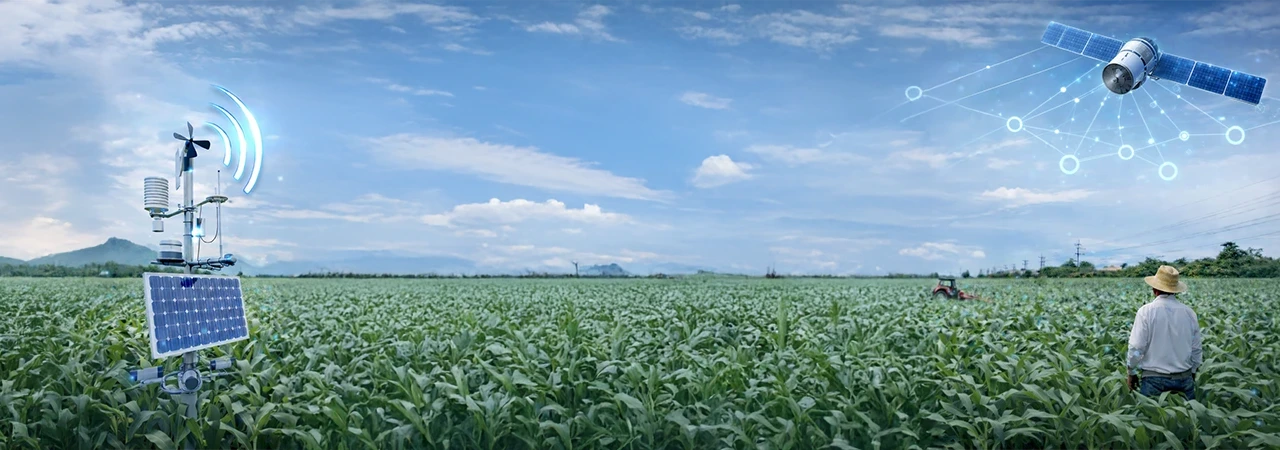


For modern agricultural enterprises, reactive risk management is no longer viable. The increasing frequency and severity of climate shocks demand a transition to proactive, data-driven resilience. This shifts the real transformation toward predictive agriculture enterprise models leveraging big data and artificial intelligence (AI).
The Climate Volatility Crisis Reshaping Agri Enterprises Today
The “predictability crisis” in horticulture and agriculture is driven by the increasing frequency of climate shocks. Research indicates that even a 1°C rise in temperature can significantly compromise the yields of staples like wheat and rice.
- Procurement unpredictability: Inability to secure volumes due to localized crop failures
- Margin erosion: Sudden price fluctuations driven by supply-side shocks
- Increased operational risk: Lack of visibility into regional sourcing vulnerabilities
- Supply chain instability: Directly impacts the top and bottom line
Traditional agriculture relies heavily on historical patterns, resulting in reactive decision-making. The industry is now moving toward AI climate risk management in agriculture, identifying threats weeks or even months in advance.
Understanding the Predictive Shift: What It Really Means for Agri Enterprises
- Climate patterns
- Satellite imagery
- Soil health data
- Crop phenology models
- Supply chain intelligence
Reactive agriculture vs. Predictive agriculture: A Business Model Comparison
| Key Aspect | Reactive Agriculture | Predictive Agriculture |
|---|---|---|
| Decision-making Based on | Historical trends and past seasons | Near real-time data and predictive forecasts |
| Risk Management | Risks addressed post-disruptions | Proactive risk identification and mitigation strategies |
| Supply Chain Visibility | Limited visibility across sourcing regions | End-to-end near-real-time visibility |
| Crop Planning | Static crop planning based on traditional cycles | Dynamic climate-aware mapping |
| Monitoring | Manual monitoring and field reporting | Remote monitoring, deploying satellite imagery, and data analytics |
This transition toward predictive analytics agriculture supply chain enables enterprises to plan procurement, logistics, and production with significantly greater confidence.
What "Predictive Intelligence" Actually Covers in an Agri Enterprise Context
- Yield prediction across geographies
- Crop stress and disease risk forecasting
- Climate impact modelling
- Supply chain disruption alerts
- Procurement planning based on predicted production
The Four Pillars of Predictive Climate Risk Architecture
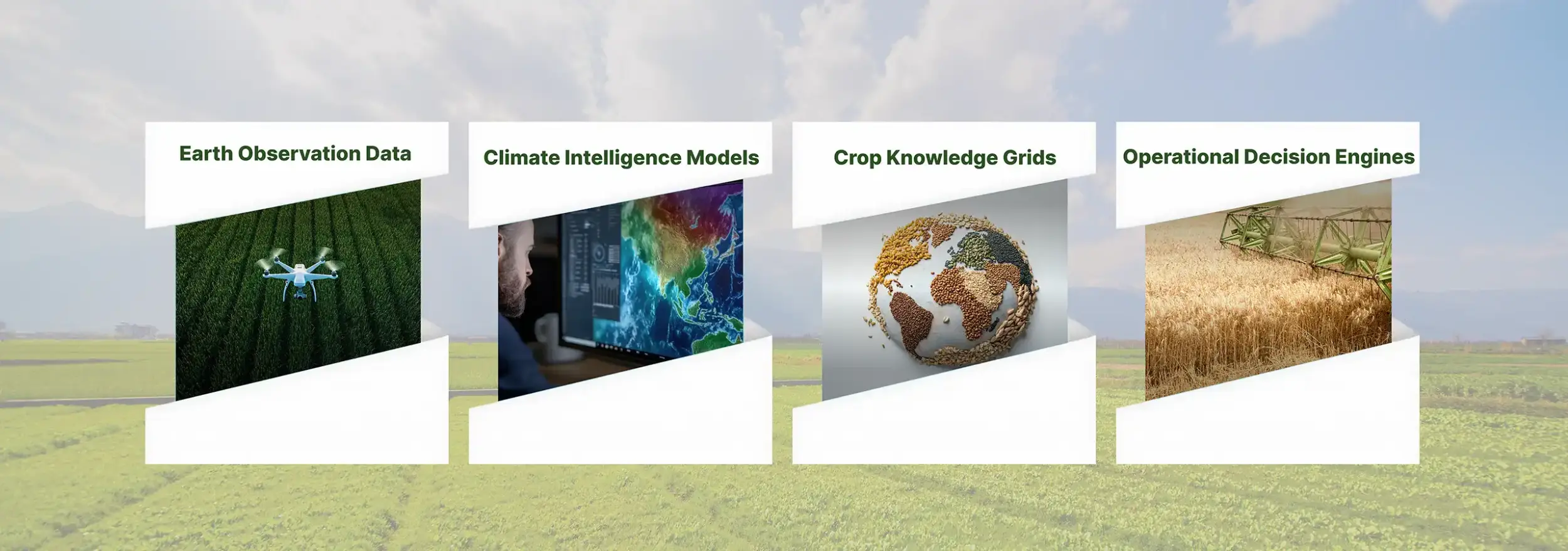
For an agri enterprise, predictive climate intelligence typically depends on four key pillars:
- Earth Observation Data: Satellite imagery, drones, and IoT devices provide continuous monitoring of crop growth, soil moisture, and vegetation health.
- Climate Intelligence Models: AI models analyze weather patterns, historical climate trends, and predictive scenarios to forecast potential disruptions.
- Crop Knowledge Grids: Comprehensive digital repository of farm pixel datasets to understand crop-climate-input interactions.
Cropin’s global crop knowledge grid, a foundation for large-scale predictive modeling, currently covers 400+ crops, 10,000 varieties, across 103 countries.
Operational Decision Engines: These systems translate raw data into predictive insights for operational recommendations such as irrigation planning, seed selection, harvest timing, and yield prediction.
AI Technologies Driving the Predictive Agriculture
- Satellite imagery
- Soil moisture datasets
- Weather forecasts
- Historical yield data
- Field data
- Open data sets & more
Satellite & Remote Sensing Intelligence in Enterprise Agritech
- Monitor near-real-time crop development across large geographies
- Detect stress caused by drought or disease
- Track vegetation health indicators
- Predict yield variability
Real-World Applications: How Enterprises Are De-Risking Climate Volatility
Supply Chain Climate Resilience
Predictive analytics allows enterprises to:
- Identify climate threats early
- Plan logistics around expected yield variations
- Reduce market volatility
Predictive Yield Forecasting to Stabilize Revenue & Margins
This enables:
- Securing an alternative supply to adjust procurement strategies
- Optimizing inventory planning to reduce waste and storage costs
- Improving financial stability before market prices spike
AI-Driven Early Warning Systems for Crop Health and Pest Control
This allows for:
- Targeted early interventions at reduced input costs
- Minimized crop loss
Climate-Smart Procurement
This approach allows companies to:
- Diversify sourcing regions
- Reduce dependence on climate-sensitive areas
- Secure stable raw material supply
Water & Input Efficiency as a Climate Risk Mitigation Strategy
This enables:
- Optimization of irrigation and chemical use
- Reduction of resource waste and improved farm management
- Drive climate resilience
Building a Predictive Climate Risk Strategy
Step 1 - Conducting a Climate Risk Maturity Assessment
Enterprises must evaluate:
- Supply chain vulnerability
- Climate-sensitive production regions
- Data availability
- Current decision-making models
Step 2 - Selecting the Right AI Agritech Platform for Enterprise Needs
- Remote Satellite monitoring
- Data integration capabilities
- Predictive analytics
- Global crop intelligence
Step 3 - Integrating Predictive Intelligence Into Business Operations
This includes integration with:
- Procurement planning
- Supply chain management
- Risk management frameworks
- Crop advisory systems & more
Step 4 - Scaling From Pilot to Enterprise-Wide Deployment
Successful pilots should then expand across:
- Multiple sourcing regions
- Crop categories
- Supply chain operations
- Global scale for “Single Source of Truth
Conclusion
FAQs
What types of AI technologies are used for climate risk management in agri enterprises?
How do agri enterprises integrate AI climate risk tools into existing ERP and supply chain systems?
Is predictive AI in agriculture only for large enterprises or mid-market companies?
How does predictive climate intelligence support ESG and sustainability reporting?
Author Bio
Aditya Shah
Aditya Shah is the Global Director of Strategic Partnerships and Business Head for APAC at Cropin, where he plays a key role in shaping the company’s global growth strategy through innovative collaborations. With over a decade of experience, he has been instrumental in establishing high-impact partnerships with industry giants like Google, Amazon, and Microsoft, bolstering Cropin's technological leadership. Aditya also spearheads strategic collaborations with development organizations such as the Bill & Melinda Gates Foundation and the World Bank to drive positive impact for marginalized farmers. A creative thinker, he passionately advocates for blending attitude, skills, and knowledge to fuel true innovation across the agri-food ecosystem.