


Synopsis:
Challenges in Scaling Regenerative Agriculture The Multi-Billion Dollar Standoff
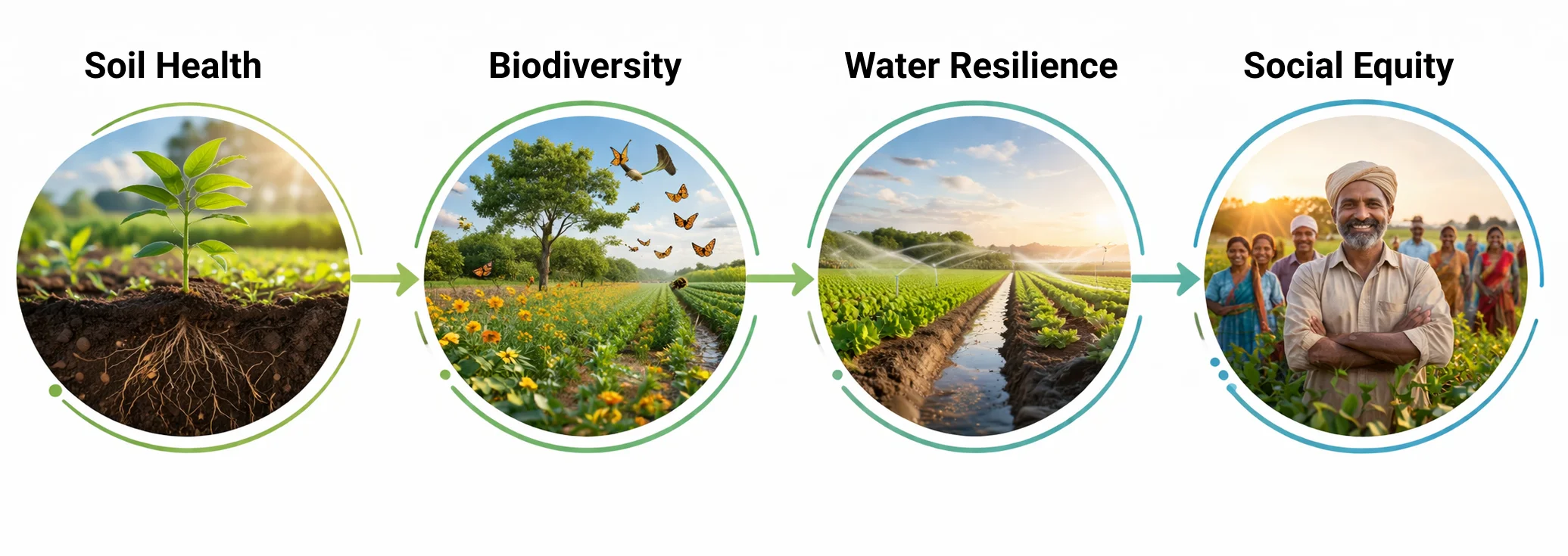
Why Regenerative Agriculture Adoption is Not Scaling
- For the Farmer : Initial implementation costs are high, yield is low, quality of produce could be uncertain. Decision-making requires support. Data collection often feels like “digital paperwork” that adds labor without adding clear value to the farm gate.
- For the procurement teams : Investment must be justified. Greenwashing is a real threat. Sustainability must be validated. Self-reported data or low-resolution satellite imagery is not enough for rigorous Environmental, Social, and Governance (ESG) audits and multiple reporting.
Role of AI and MRV in Regenerative Agriculture Validation
Scaling Regenerative Agriculture in Staple Crops
The Message: If it doesn’t work for the commodity staples that feed the world, it doesn’t work at all.
Regenerative Agriculture Validation: From Pilot to Proof
Regenerative Agriculture Case Study: FIRST Potato Initiative
- 5% yield increase
- 1.5% increase in solids,
- Euro 410/ha benefit
Conclusion
Author Bio

Shashi Kant
Shashi Kant leads customer experience for the EMEA region at CropIn Technology Solutions, bringing a rare blend of technical depth and client-first thinking to the agri-tech world. With extensive expertise in implementation, pre-sales, and client onboarding, Shashi specializes in turning complex AI-driven data into smooth, successful adoption journeys. He works at the intersection of technology, agriculture, and human experience, ensuring that innovations such as satellite analytics, IoT-driven insights, and machine learning models deliver clear, measurable value. By bridging the gap between corporate sustainability goals and on-ground farming realities, Shashi helps our partners navigate the digital transformation of their food systems. He is dedicated to driving regenerative agriculture practices that benefit both the enterprise and the grower.