

Synopsis:
Introduction
Ideal Growing Conditions: Getting the Foundation Right
- Climate: Long, warm summers between 20–35°C, cool winters for dormancy, and critically dry weather during both flowering and ripening. Humidity is the enemy of quality at both ends of the season.
- Sunlight: Full sunlight is non-negotiable. It drives sugar accumulation, promotes even color development, and supports uniform ripening across clusters.
- Soil: Deep, well-drained sandy loam or loamy soils with good aeration. The vine’s root system needs room to develop and consistent moisture access without waterlogging. Soil pH should be between 6.0 and 7.5 for optimal nutrient availability.
- Nutrition: Balanced NPK throughout the season, avoid excess nitrogen near ripening as it promotes vegetative growth at the expense of fruit quality.
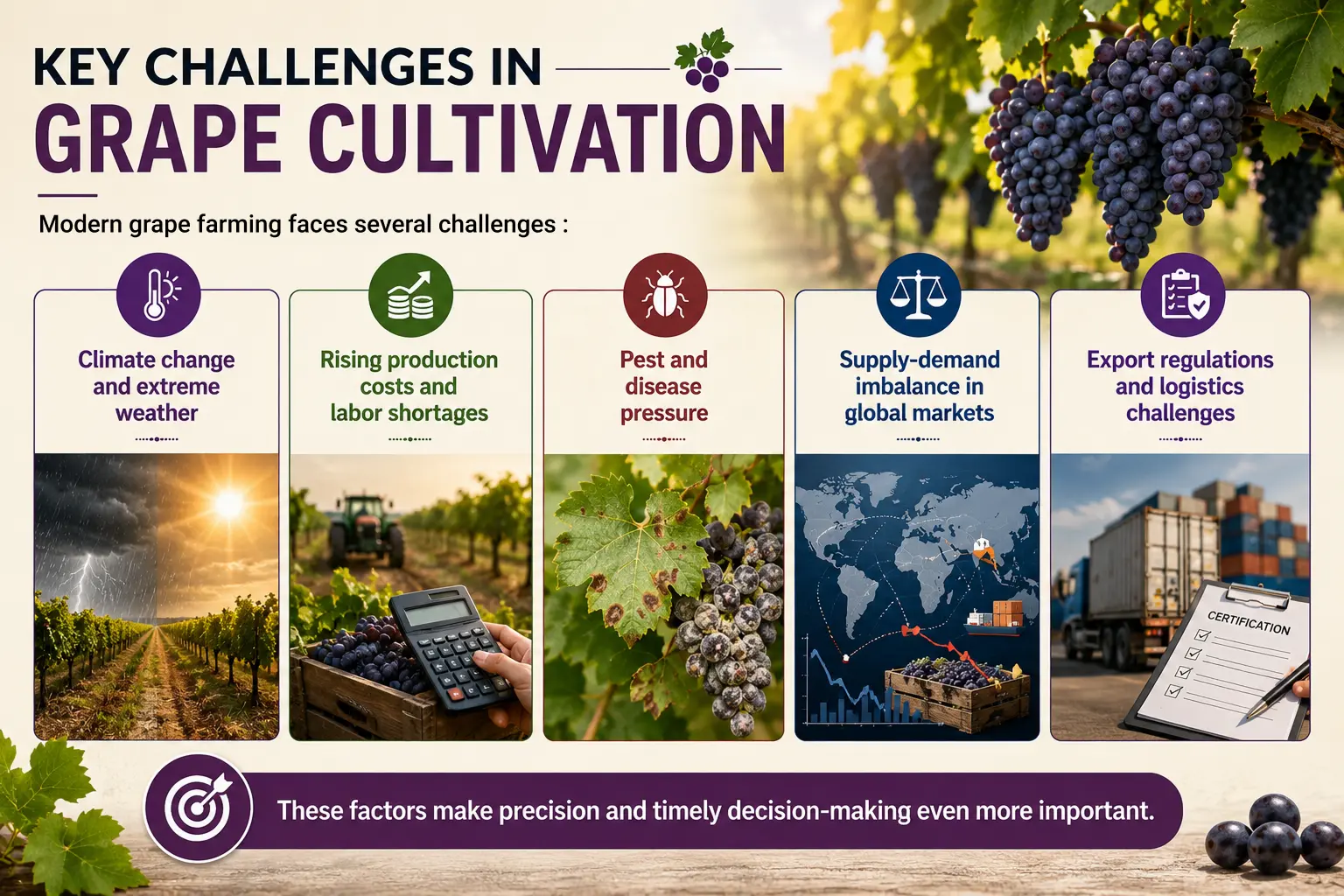
How Long Does It Take for Table Grapes to Mature ?
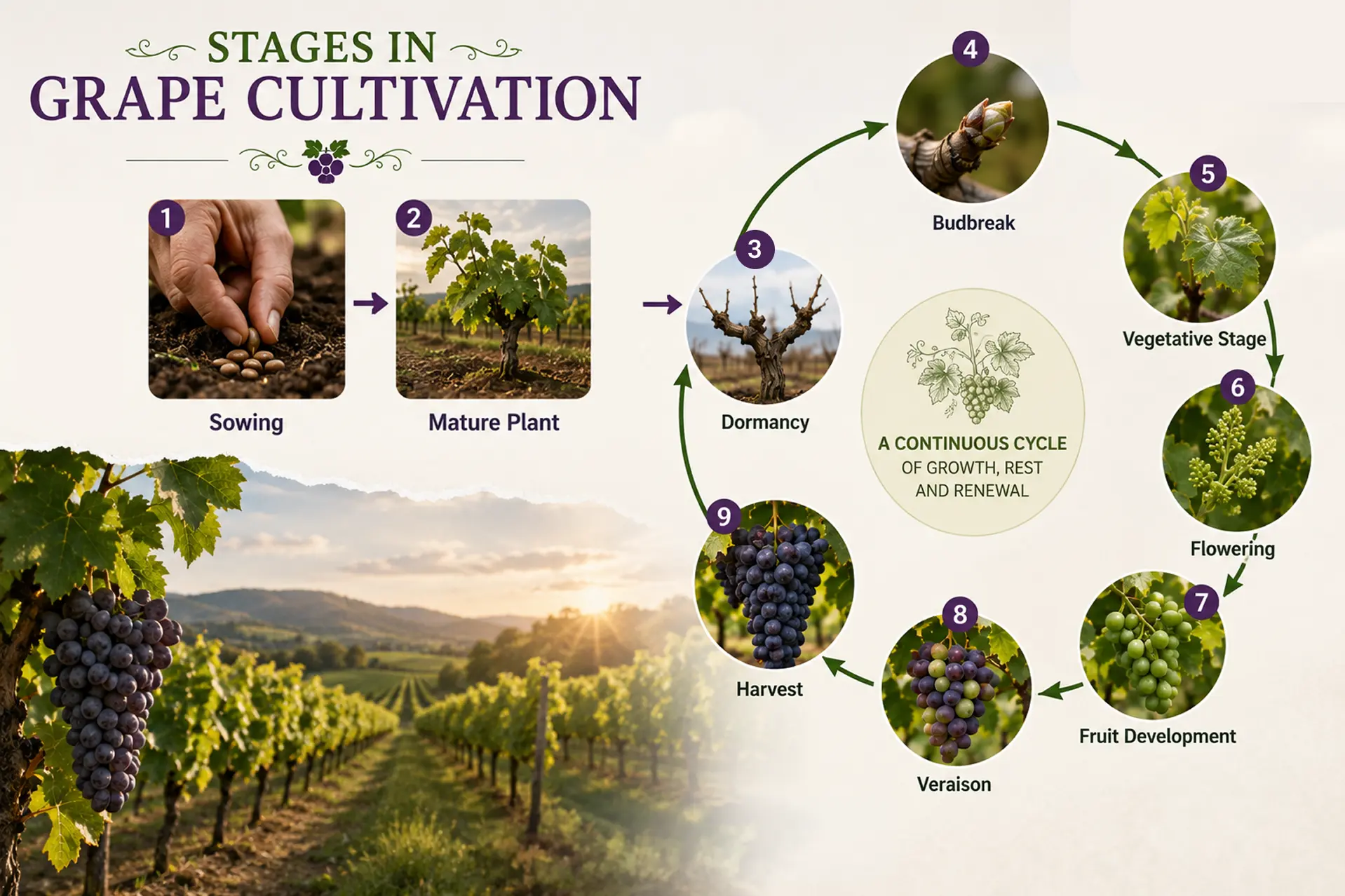
Why Stage-Specific Management Defines the Harvest
Crop Growth: Stage-by-Stage Insights
Stage 1: Dormancy — The Season Starts Here
Stage 2: Budbreak — High Stakes, Narrow Window
Stage 3: Vegetative Stage — Building the Canopy
Stage 4: Flowering — The Most Sensitive Two Weeks of the Year
Stage 5: Fruit Development — Securing Size and Quality
Cluster and berry thinning and girdling are commonly used to redistribute the vine’s energy toward fewer, larger berries and improve cluster uniformity. Disease pressure intensifies at this stage. Young berries are highly susceptible to powdery mildew, which causes russeting, cracking, and surface scarring that renders fruit unmarketable. Downy mildew can attack clusters directly, causing white fungal growth, berry shriveling, and drop.
Stage 6: Veraison — Reading the Vineyard
Stage 7: Harvest — Where Every Decision Comes Home
Botrytis remains the primary disease concern in the final weeks, particularly in humid or wet conditions. Any infected berries should be removed during harvest to prevent the disease spread to healthy clusters in packing and storage. Heat events in the days before harvest reduce berry firmness rapidly and shorten shelf life. Bird and insect damage increases as sugar levels rise, each wound is a potential entry point for rot. Post-harvest, speed matters. Grapes must be pre-cooled quickly, packed carefully, and kept continuously in the cold chain from vineyard to consumer. Quality won at harvest can be lost in hours at ambient temperatures.
Integrated Crop Management: The Technology Layer
- Disease and pest mitigation: Early probability alerts from DEWS enable preventive intervention before symptoms appear, protecting yield and reducing unnecessary chemical applications.
- Yield enhancement: Nutrient and irrigation advisories timed to critical growth stages improve berry size, cluster weight, and harvest uniformity
- Quality and resource management: Real-time soil moisture monitoring and weather-linked irrigation tools calibrate water application precisely, avoiding both stress and excess at the stages where each is most damaging.
- Optimized harvest planning: Satellite-based crop stage monitoring and yield forecasting align harvest logistics with actual plant development. This reduces losses from mistimed picking and post-harvest handling gaps.
Conclusion: The Vine Remembers Everything
Author Bio

Anagha
Anagha K V is a Consultant Agronomist at Cropin. A graduate in Agriculture from Amrita Vishwa Vidyapeetham, she bridges traditional agricultural wisdom with cutting-edge digital solutions. Anagha plays a pivotal role in the team’s regional research initiatives, providing crop-specific insights that ensure Cropin’s technology remains grounded in real-world science and field-level realities. Beyond her commitment to agricultural innovation, Anagha is an artist at heart. Her passionate singing is complemented by her kinetic vitality and fluidity in dancing.