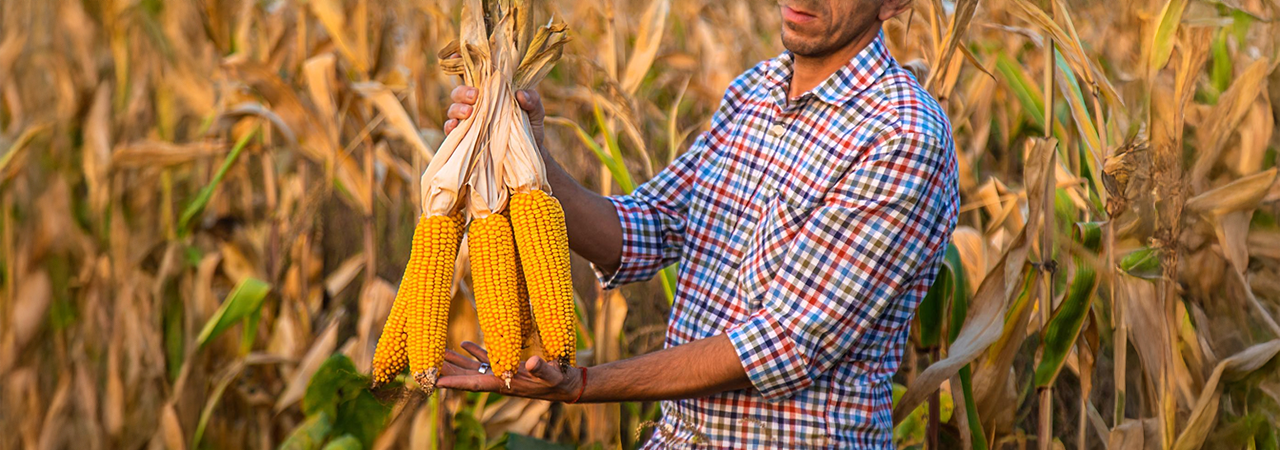
Maize (Zea mays L.) is far more than just a global staple. Maize is a strategic contributor to the GDP of many nations, including the US, Brazil, Argentina, China, and Mexico. The global maize market, valued at about at $320.31 billion in 2026, makes the crop crucial to the economy and food security. From essential livestock feed and industrial processing to specialty markets like popcorn and sweet corn (of course, all of us love it!), maize serves as a versatile backbone for both smallholder systems and large-scale precision farms. Grown globally, it feeds billions directly, anchors livestock industries, and fuels the bioenergy sector.
Yet despite its adaptability, maize remains one of the most management-intensive crops in the world. Diseases, water stress, and nutrient deficiencies strike fast, and the gap between a well-managed crop and a poorly managed one is measured in tonnes per hectare. Farmers and agribusinesses are increasingly turning to data-driven crop management and digital tools to close that gap.
This guide walks through maize cultivation from the ground up, from field selection to harvest – highlighting where agri-tech interventions make the sharpest difference.
Why Matters in Modern Maize Farming
Maize sits at the intersection of food security, animal nutrition, and industrial agriculture.
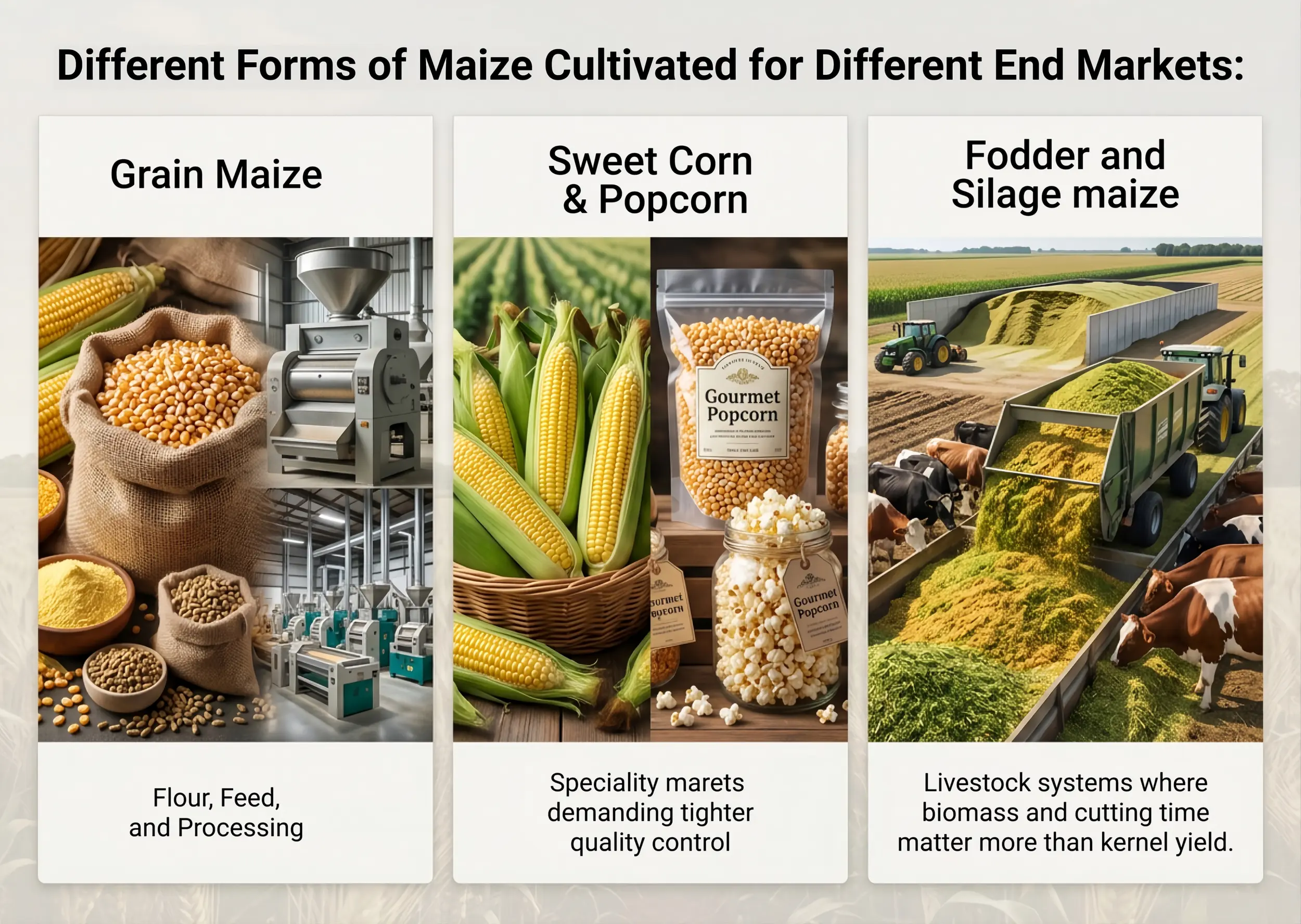
Different forms of maize cultivated for different end markets:
- Grain maize for flour, feed, and processing;
- Sweet corn and popcorn for specialty markets demanding tighter quality control;
- Fodder and silage maize for livestock systems where biomass and cutting time matter more than kernel yield.
Choosing the right type and the right variety within that requires matching local market demand, climate suitability, and available equipment. Farm management platforms can help growers compare hybrid performance data, expected yields, and variety-specific risk profiles before a single seed goes into the ground.
What Are Some Challenges in Maize Cultivation
Some challenges currently impacting global and regional maize production:
- Climate Variability and Extreme Weather: Climate change remains the most significant threat. Maize is highly susceptible to droughts and unpredictable rainfall patterns. Heat stress, particularly in regions like Sub-Saharan Africa, is a big threat. Production shifts are observed with climate change.
- Aggressive Pests and Diseases: The constant pressure from pests and disease threats requires continuous investment in crop protection. These not only reduce yield, but can also render the grain unsafe for consumption.
- Nutrient and Soil Management: As a “heavy feeder,” maize nutrient management levels are high that are often difficult to maintain.
- Economic and Supply Chain Constraints: Global market dynamics and logistics are reshaping the profitability of maize farming.
What are Maize Growing Conditions: Climate, Soil, and Field Selection
This warm-season crop thrives in sunny, frost-free environments with a long growing period and well-distributed rainfall.
- Optimal Environment: Average temperatures of 20–30°C, at least 6–8 hours of daily sunlight, and roughly 400–750 mm of water during the growing season are ideal.
- Soil Health: Maize is a “heavy feeder” that requires well-drained, fertile loamy or sandy loam soils rich in organic matter with a pH of 5.5–7.5.
- The Power of Preparation: To ensure uniform emergence, land must be plowed 2–3 times to break up compaction, followed by incorporating well-decomposed manure to improve soil structure.
- Nutrition: Rich organic matter and strong nutrient availability are prerequisites, not bonuses.
- Irrigation: Waterlogged or compacted soils restrict root development and set the stage for disease pressure later in the season.
- The Big No: Frost at any stage is damaging; prolonged cold during early growth is equally costly.
Remote sensing and satellite-based soil health tools can help agronomists assess field suitability at scale, mapping drainage patterns, organic carbon levels, and historical yield performance before committing to a planting plan.
Data-Driven Field Selection Using Cropin Cloud Platform
Climate change has resulted in production shifts. Identifying regions and plots having ideal temperature, soil moisture, and humidity is vital. Cropin’s contextualized AI models provide data-driven regional insights into historical climate trends, active agricultural areas, crop suitability, sown areas, acreage, and yield potential for defined regions. This helps agri-businesses earmark the best regions for cultivation and sourcing. The regional analysis is complemented by the granular plot level, which enables data-driven decision-making during farm operations.
Pre-sowing Practices
Land Preparation and Seedbed Management
A well-prepared seedbed is the single most controllable factor in achieving uniform emergence and strong early-season growth. Plow the field 2–3 times to break compaction, then use a rotavator or harrow to create a fine, level seedbed. Incorporate well-decomposed farmyard manure or compost (around 8–10 t/ha) during the final pass to improve soil structure and moisture retention. This investment at the start reduces weed pressure in the first critical weeks and builds root resilience against later stress events.
Seed Selection, Rate, and Spacing
Modern maize hybrids are bred for higher yields, better stress tolerance, and improved disease resistance. Matching the hybrid choice to disease pressure history in a given location is the first and most important decision to make. Seed rates vary by type:
- Grain maize typically requires 18–22 kg/ha
- Popcorn around 10–12 kg/ha
- Sweet corn is slightly lower due to wider spacing requirements.
Row spacing is generally 60–75 cm between rows and 20–25 cm within rows for grain maize, adjusted for fodder or specialty types.
Sowing
Planting Time, Depth, and Method
Maize should be planted when soil moisture and temperature both favor rapid, uniform germination. In temperate regions, sowing happens in spring; in tropical and monsoon systems, planting aligns with the onset of rains to ensure consistent moisture for establishment.
A planting depth of 4–5 cm is ideal under normal soil conditions, with slight adjustments in drier soils. Precision planters and mechanized seed drills deliver the consistency that hand-sowing cannot. Reducing gaps, doubles, and the uneven canopy drives disease pressure later in the season.
Using historical and forecasted weather data, Cropin’s AI/ML models can identify optimal sowing windows, provide alerts on risks of frost or moisture stress that threaten yield, and increase susceptibility to diseases. Digitization on Cropin’s farm management app provides complete near-real-time visibility of field activities. It helps you configure tasks, provide alerts on the best “Package of Practices” (PoP), and share timely warnings related to climate and diseases with farmers. You can monitor adherence to PoP and maintain logs.
Growth Stages, Disease Risk, and Agri-Tech Responses
Understanding what maize needs, and what threatens it, at each growth stage is the foundation of effective maize crop management.
Growth Phase
Timeline
Critical Success Factors
Emergence
0–7 Days
Adequate soil moisture is vital; crusted soil can reduce plant stand.
Mid-Vegetative
4–7 Weeks
Rapid height gain and canopy formation require steady water and high airflow.
Tasseling & Flowering
8–9 Weeks
The most sensitive stage. Water stress here can burn pollen and dry out silks.
Grain Filling
9–12 Weeks
High heat or dry weather reduces kernel weight and size.
Critical Maize Growth Stages
Emergence (0–7 days after sowing)
The seedling breaks the surface, the first leaves appear, and the root system is established. Adequate soil moisture and warm soil temperatures are critical; crusted or waterlogged soils cause poor, uneven emergence. Damping-off (caused by Pythium, Fusarium, and Rhizoctonia) and seed-borne early leaf blights are the primary disease risks at this stage, leading to root rot, stunted growth, and reduced plant stand.
Early Vegetative / Seedling Stage (2–4 weeks)
Rapid leaf development and root expansion define this phase. Leaf blights are the dominant threats, causing chlorosis, seedling death, and poor stand establishment. Long droughts or poor drainage at this stage set the conditions for cumulative yield loss that no subsequent intervention can fully overcome.
Mid-Vegetative Stage (4–7 weeks)
The plant gains height quickly, thickens its stem, and forms a dense canopy. High humidity with frequent rain increases the risk of leaf spots and rust. When plants are too closely spaced, airflow between rows is restricted, leaves stay wet longer, and disease spreads fast. Field teams that can monitor microclimate conditions and canopy density at the plot level can catch these risks early.
Ear Initiation / Late Vegetative Stage (6–8 weeks)
The plant approaches full height and begins forming the ear internally. This is a stress-sensitive phase: dry spells or very low humidity can reduce ear size and limit the number of kernels that will ultimately form. Water stress monitoring and irrigation planning are very vital from now on. Anthracnose, leaf blights, and leaf spots are the main disease concerns, amplified by high night temperatures.
Tasseling and Flowering (8–9 weeks)
The most sensitive stage for water. The tassel releases pollen while silks appear, and pollen must reach silks for kernels to set. Hot, dry conditions or prolonged dry spells can burn pollen and dry out silks, leading to poor pollination and missing kernels. Severe outbreaks of leaf blights and rust begin at this stage, driven by cool, humid conditions with frequent rain.
Grain Filling Stage (9–12 weeks)
Kernels swell and fill with starch. The plant diverts energy from leaves to developing grain. Dry weather reduces kernel size and test weight. So, steady moisture during the first half of grain fill is critical. Later in this phase, excess rain and prolonged humidity increase the risk of fungal diseases, which can lead to lodging and catastrophic pre-harvest losses.
Dough and Maturity Stage (11–15+ weeks)
Kernels harden; the plant dries down. Irrigation is reduced and then stopped. Dry, warm, sunny conditions at this stage help grain reach optimal moisture levels for harvest. Continued humidity or rain increases the risk of fungal diseases in both the field and storage. Harvest is typically targeted when grain moisture drops to around 20–25%, depending on drying and storage infrastructure.
Weed Management (0-6 weeks)
Weed competition in the first six weeks is the most damaging. Pre-plant and pre-emergence herbicides, followed by a single post-emergence pass, are standard in most systems. Where herbicide access is limited, mechanical or manual weeding in this window is non-negotiable.
How to Leverage Agtech in Maize Cultivation
The Role of Disease Early Warning Systems
Maize disease management across large acreages during the above stages using experience-based scouting alone is increasingly untenable. Weather-driven probabilistic models such as Cropin’s Disease Early Warning System (DEWS) continuously analyze temperature, humidity, rainfall patterns, and crop growth stage, along with historical data, to generate plot-level risk scores before symptoms appear. Field teams can prioritize their visits, validate alerts on the ground, take mitigative efforts and capture outcomes. The result is a shift from reactive spraying to targeted, preventive intervention.
No single intervention controls maize disease across the full season. Follow this integrated approach to manage disease:
- Resistant hybrids – choose varieties with partial resistance to dominant diseases in your region.
- Crop rotation and residue management – rotate with non-grain crops and reduce surface maize residue to slow down soil-borne and stubble-borne pathogens.
- Optimal planting time and plant density – avoid very late sowing and overcrowding to help plants grow faster than diseases can spread.
- Disease Early Warning System (DEWS): Data-driven scouting and disease-risk models add the intelligence layer. Cropin’s DEWS flags the probability of high disease risk based on weather, crop stage, and historical data. This enables targeted preventive action without blanket spraying that drives resistance and erodes margins.
Fertilizer, Irrigation, and Crop Management with Cropin Cloud Platform
Maize is a heavy nitrogen feeder, with peak demand from early vegetative growth through grain filling. Base applications of phosphorus and potassium (plus part of the nitrogen) are best at or soon after planting. Splitting nitrogen doses around knee height and at tasseling is crucial for matching peak crop demand and reducing losses from leaching.
Irrigation timing is equally critical. Tasseling and silking are the highest-risk windows for water stress. Water deficit here directly reduces kernel set and grain quality. Drip and sprinkler systems improve water-use efficiency in water-scarce zones; weather-based irrigation advisories can trigger smart scheduling that applies water only when the crop actually needs it.
By digitizing the entire crop lifecycle on the Cropin platform, managers can monitor real-time nutrient demands and schedule split fertilizer applications to match the crop’s peak nitrogen needs. By leveraging the Water Stress Index and hyper-local weather alerts from Cropin, you can ensure irrigation is triggered only when necessary, protecting the crop during the high-risk tasseling and silking windows while preventing resource waste.
Cropin DEWS model enables targeted scouting and preventive treatments, transforming input management from a reactive approach into a precise, cost-effective proactive cultivation practice. Cropin Connect also helps the field force to stay connected with farmers. You can provide alerts for packages of practices (PoP), weather, DEWS, and more. The app helps you capture the entire field operations even in regions with low connectivity and provides end-to-end near-real-time visibility.
Conclusion: Data-Driven Maize, Season After Season
Maize rewards precision. Every stage of the crop cycle, from seedbed preparation to harvest timing, has a defined set of conditions that either build yield or erode it. The farms and agribusinesses that consistently deliver top-quartile performance treat data as a core input, not an afterthought.
Agri-tech platforms bring together satellite monitoring, weather analytics, disease prediction, and field-level feedback into a single decision loop, giving growers the visibility to act early, act specifically, and measure what works. Season after season, that is how yield gaps close.
Explore how Cropin's intelligence platform can transform your maize program
What is predictive agriculture, and how does it improve supply chain efficiency?
Predictive agriculture uses AI and data analytics to forecast crop yields, demand, and risks. It improves efficiency by enabling better planning, reducing waste, and optimizing resource use across the supply chain.
How does predictive analytics reduce risks in global food supply chains?
It identifies potential disruptions, such as weather events or logistics delays, in advance, allowing businesses to take proactive measures and minimize impact.
What are the economic benefits of implementing predictive agriculture?
Businesses benefit from cost reduction, improved yield quality, reduced waste, and higher profitability, resulting in strong ROI.
How does predictive agriculture support climate-smart and sustainable farming?
It helps farmers adapt to climate variability, optimize resource usage, and reduce environmental impact, supporting sustainable agriculture practices.
Which industries and businesses benefit most from predictive agriculture?
Agribusinesses, food processors, retailers, exporters, and supply chain operators benefit significantly from improved forecasting, efficiency, and risk management.
Author Bio

Siva Shankar
Siva Shankar is an Agronomist and Agri-Information Technologist at Cropin, where he serves as the vital link between traditional agricultural wisdom and cutting-edge technology. A graduate of Tamil Nadu Agricultural University, Siva acts as a vital link between traditional agricultural science and digital innovation. He contributes to core initiatives like crop-weather impact analysis, simulation modeling, yield estimation, and flood detection. By sharing deep technical insights, Siva helps the tech team ensure that Cropin’s solutions remain grounded in agronomic reality, giving farmers and agri-businesses the edge they need to succeed. A man with a green thumb, Siva also finds inspiration in reading and music.