Crop Knowledge Grid
Tech-powered food security: Resilient, high-yield, premium rice from paddy to plate
Rice is the staple for over 3.5 billion people worldwide, especially in Asia, with a 90% consumption rate.
Major challenges
Water Scarcity and Climate Change; Pests, Diseases, and Weeds; Soil Degradation and Yield Gaps are the top challenges in rice production.
Digitize farm operations with intelligence-led farming solutions
- Analyze each plot based on growth indices
- Remote sensing and GIS for pest control in smart rice farming
- Track crop health and prevent undue loss
Real-world deployments
15,76,171.07
Acres digitized on Cropin platform
- Crop yield
- Crop stage
- Crop progression
- Harvest window estimation
- Crop health indicators
- Irrigation advisories
- DEWS
- Bacterial blight
- Sheath blight
- Blast
- Smut
- Brown spot
- Brown planthopper
Case in point: Space4Good
- 20% increased productivity
- Accurate advisories and insights shared
- Improve crop productivity and increase income
- Employing sustainable agriculture practices
- 15% reduced fungicide expense
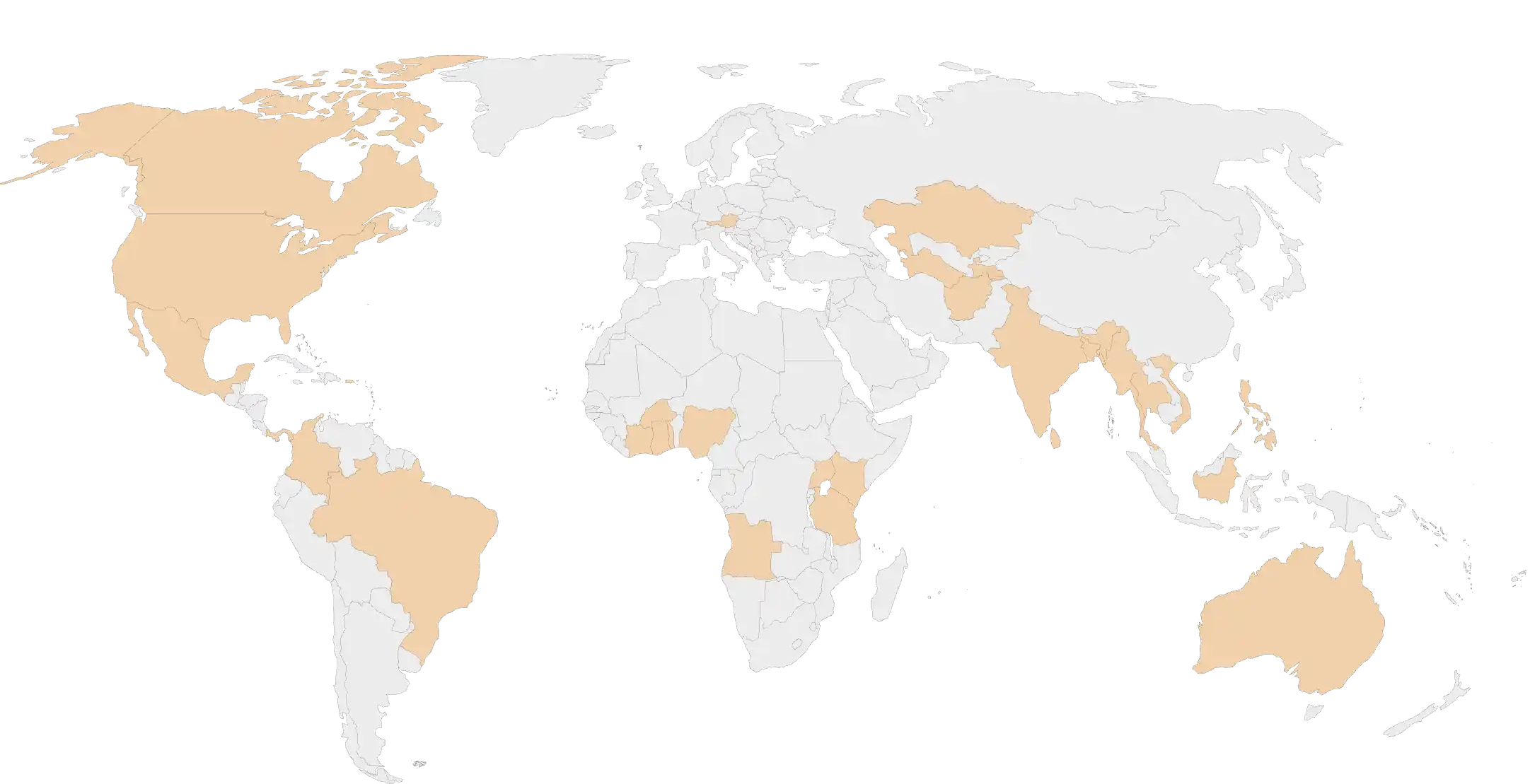
Global presence
While only a small percentage of global rice production is traded internationally (around 8%), disruptions in production in major exporting or importing countries can significantly impact global food prices and economic stability.
Angola
Angola
Burkina Faso
Burkina Faso
Ghana
Ghana
Ivory Coast
Ivory Coast
Kenya
Kenya
Nigeria
Nigeria
Tanzania
Tanzania
Togo
Togo
Sri Lanka
Sri Lanka
Bangladesh
Bangladesh
India
India
Philippines
Philippines
Thailand
Thailand
Indonesia
Indonesia
Myanmar
Myanmar
Kazakhstan
Kazakhstan
Afghanistan
Afghanistan
Turkmenistan
Turkmenistan
Tajikistan
Tajikistan
Kuwait
Kuwait
Vietnam
Vietnam
Andorra
Andorra
Austria
Austria
Anguilla
Anguilla
Aruba
Aruba
Canada
Canada
Mexico
Mexico
Panama
Panama
USA
USA
USA
USA
Brazil
Brazil
Australia
Australia
Colombia
Colombia
locations:
- Angola
- Burkina Faso
- Ghana
- Ivory Coast
- Kenya
- Nigeria
- Tanzania
- Togo
- Sri Lanka
- Bangladesh
- India
- Philippines
- Thailand
- Indonesia
- Myanmar
- Kazakhstan
- Afghanistan
- Tajikistan
- Turkmenistan
- Kuwait
- Vietnam
- Andorra
- Austria
- Anguilla
- Aruba
- Canada
- Mexico
- Panama
- USA
- Brazil
- Australia
- Colombia
- Panama
Other resources
Unlock smarter crop cultivation with Cropin. Make your food production, sourcing, and supply predictable, profitable, and sustainable.
Our in-depth market report delves into the intricacies of Nigeria's paddy cultivation. By harnessing the power of satellite data...
A deep dive into a leading seed producer's transition to near real-time monitoring and management of seed production operations...
How CropLens uses remote sensing and geographic information system technology to drive pest control in smart rice farming....
Measured effectiveness of Rice Variety given to farmers in West Bengal & Bangladesh by the largest seed company to...
Frequently asked questions
How does Cropin address water scarcity, the biggest challenge in rice cultivation, through its platform?
Cropin AI models use proprietary crop knowledge grid, satellite data, and weather forecasts to guide farmers on optimal water usage. The platform recommends when and how much to irrigate, helping reduce water wastage while ensuring healthy crop growth, even in water-scarce regions.
What is "growth index analysis per plot," and how does it improve rice farm management?
Growth index analysis per plot involves tracking crop health and growth at the individual field level using satellite imagery and AI. By monitoring each plot, Cropin identifies underperforming areas, predicts yields, and suggests timely interventions, allowing farmers to make precise, data-driven decisions.
How does Cropin use GIS and remote sensing specifically for pest control in rice farming?
Cropin combines Geographic Information System (GIS) mapping with remote sensing data to detect stress patterns in rice fields that may indicate pest infestation. This allows farmers to identify hotspots early, target pest control measures efficiently, and prevent large-scale outbreaks. Cropin Disease Early Warning System (DEWS) provides alerts on probablity of disease occurrence to implement mitigative steps.
What diseases and pests does Cropin's Disease Early Warning System (DEWS) monitor in rice crops?
Cropin’s DEWS monitors key rice diseases and pests, including: Bacterial blight, Sheath blight, Rice blast, Brown spot, Brown planthopper. The system provides early alerts and management recommendations, reducing crop loss and chemical overuse.
How does Cropin tackle soil degradation in rice-growing regions where decades of intensive farming have reduced yields?
Cropin analyzes soil health, nutrient levels, and historical crop data to recommend targeted interventions like crop rotation, organic amendments, and optimized fertilization. This approach restores soil fertility, improves long-term yields, and ensures sustainable rice cultivation.
What role does satellite monitoring play in rice "Acreage Mapping"?
Using the Space4Good collaboration as a benchmark, Cropin utilizes radar and optical satellite imagery to identify rice plots even through cloud cover. This is critical for rice, as it is often grown during monsoon seasons when traditional satellite visibility is low.
How can Cropin help reduce methane emissions in rice cultivation?
Rice cultivation is a major source of methane emissions. Cropin enables the monitoring of “Alternate Wetting and Drying” (AWD) techniques. By digitizing water management logs and verifying field conditions via satellite, the platform provides the “Evidence” needed for carbon credit certification and sustainable rice labels.
How does Cropin platform handle the challenges of rice transplanting and "Days After Sowing" (DAS)?
Cropin uses satellite intelligence to detect the exact date of transplanting across thousands of hectares. This allows companies to precisely calculate the crop’s lifecycle and predict harvest dates with high accuracy, optimizing the procurement window for millers.
Can Cropin predict rice yields in flood-prone regions?
Yes. By integrating historical weather patterns with real-time flood monitoring, the platform can estimate potential yield losses during a flood event and adjust final output forecasts. This helps rice exporters and government agencies to proactively manage food security risks.
How does Cropin assist in the "Direct Seeded Rice" (DSR) transition?
Direct Seeded Rice (DSR) is a more water-efficient method than traditional puddling. Cropin provides field officers with digital workflows to guide farmers through the specific “Package of Practices” (PoP) required for DSR, ensuring correct seed depth and weed management to maximize the variety’s potential.
What is "Water Footprint" monitoring in the context of Cropin's rice solutions?
Cropin combines satellite-derived evapotranspiration data with pincode-level weather data to calculate the water productivity of rice crops. This allows organizations to identify which clusters are using water most efficiently and where irrigation interventions are needed.
How do field agents use Cropin to manage rice pest outbreaks like Brown Plant Hopper (BPH)?
The platform’s “Disease Early Warning System” alerts agents when growth stage, temperature, and humidity levels reach the threshold for BPH or Rice Blast. Agents can then send localized “In-App” advisories to farmers to take preventive action before the pest destroys the crop.
Intelligent crop cultivation starts here
Empower your crop yield and supply with real-time data-driven insights with Cropin Solutions
